"Poetry searches for radiance, poetry is the kingly road that leads us farthest" (Adam Zagajewski)
Showing posts with label Akseli Gallen-Kallela. Show all posts
Tuesday, 12 February 2013
Wallace Stevens's 'The Snow Man': "One Must Have a Mind of Winter..."
Akseli Gallen-Kallela, Winter (1902)
One must have a mind of winter
To regard the frost and the boughs
Of the pine-trees crusted with snow...
-Wallace Stevens, 'The Snow Man'
The line "One must have a mind of winter" has been running through my mind a good deal lately. I take this as one of the signs of midwinter (or late-winter, I hope) madness. It's true that I shouldn't have much to complain about; it's not even snowing in London right now and the evidence very much suggests that I would be ill-adapted for a winter in eastern Canada or New England. (And if I ever go to Antarctica, I will have to wrap up very well.) But still, the dark and cold are driving me a bit bonkers. I will jump for joy on the day when I leave work at 5:30 PM and it is noticeably a bit lighter outside.
'The Snow Man' is a particularly serene poem, to an almost disturbing extent. It seems to show some sort of Zen annihilation of the self at work. It is, at any rate, exceptionally evocative, and it conjures up images just like the one in the painting by Finnish artist Akseli Gallen-Kallela, above.
THE SNOW MAN (Wallace Stevens)
Sunday, 5 August 2012
P K Page's 'Stories of Snow': "Where Silent, Unrefractive Whiteness Lies"
A non-definitive list of the ten poems which have been particularly significant in inviting me into the world of modern, almost-modern, post-modern and contemporary poetry would likely include the following:
Byzantium (W B Yeats)
The Waste Land (T S Eliot)
Foal (Vernon Watkins)
The Convergence of the Twain (Thomas Hardy)
Homecoming (Paul Celan)
At the Quinte Hotel (Al Purdy)
The Tollund Man (Seamus Heaney)
Bagpipe Music (Louis MacNeice)
The Shadow of Cain (Edith Sitwell)
Stories of Snow (P K Page)
I've written about some of these before, and they could probably all be an essay in themselves. To use one of my favourite over-used words, it is a pretty random list. Poems discovered by chance, poems studied in high school or university, poems which I wasn't sure I liked at the time but which ultimately took on greater meaning, poems I heard read by the poet themself (T S Eliot, I wish! In this case, Al Purdy), poems which led me on to poems I preferred by the same poet...and so on.
I've written before about the modern Canadian poetry class which I took in university and which turned out to be very pivotal in my literary life. Among other significant moments, I discovered P K Page in this class, and that was hugely important for me. 'Stories of Snow' can lay claim to being one of the greatest Canadian poems of all time, and simply a great poem, and you can read it here. (Due to the way the poem is reproduced, be prepared to page over a couple of times - it's a long-ish poem.)
STORIES OF SNOW (P K Page)
The Canadian landscape, the landscape of the West Coast rainforest I grew up in, the tropics, Northern Europe - all of these are invoked. More than this, these are emotional and metaphoric landscapes, snowy and blossoming worlds of poetry.
In that forwards/backwards/memory/premonition way which I've come to recognise, it seems as though this poem ties in with my Antarctic fascination (although that came a little later than my first reading of this poem). In the end, the reader is invited to "unlock/the colour with its complement and go/through to the area behind the eyes/where silent, unrefractive whiteness lies." P K Page was also a talented artist, and her poems are often powerfully visual, so there is an element of artistic curiosity and exploration here.
I feel, though, that these are mainly emotional landscapes and that this has something to do with my metaphoric/semi-realistic desire to escape the twittering and the human difficulty of the modern world and to go to Antarctica - somewhere more peaceful, where access to what is truly important becomes more direct and less encumbered. "Souvenir of some never nether land": this could be ancestral memory, too, or something that I'd pass on if I ever had descendants; again, forwards/backwards/memory/premonition. I'm just waiting to find out that I had an ancestor who went to Antarctica, though I would likely have heard about it by now.
The painting is by Akseli Gallen-Kallela, the magnificent Finnish artist.
Sunday, 25 March 2012
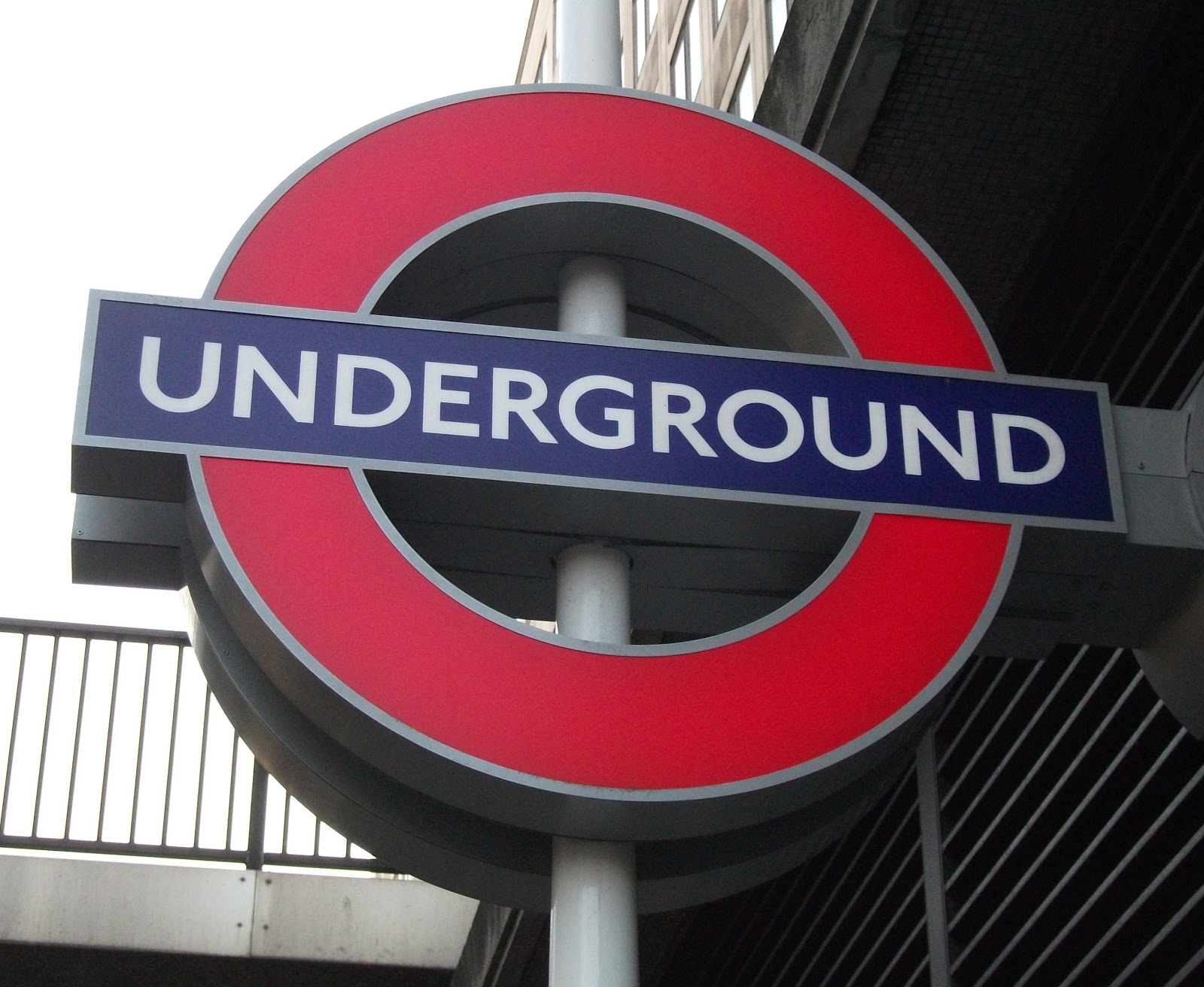
'The Underground': Seamus Heaney Goes to the Realms Below
The BBC is currently showing a documentary called The Tube, which in my opinion knocks most "reality shows" into a cocked hat. It is, of course, about the London Underground.
I have already written a bit about the Underground's poetic implications in a previous entry, but I'm very much afraid to say that my thoughts, feelings and opinions on the world under London are endless. Normal people either hate the Underground from day one of their time in London, or they come to hate it pretty soon. Sometimes I hate it. The words "signal failure" fill me with a weird combination of resignation and fury. There are times when I feel that I simply cannot face the District line on the way home, especially on the chance that I will not be able to sit down. I moan about it as much as any Londoner.
And yet, and yet...the Underground continues to fascinate me - sometimes in the way that a snake fascinates a rabbit before killing it, and sometimes with simple delight, and sometimes through pure metaphor. Although I feel that the theme music is far too jolly and straightforward, The Tube show has captured a lot of this. I am partly thrilled and partly horrified to realise just how many of the stations and employees who have wandered through the show are familiar to me. I lived near Warwick Avenue, on the Bakerloo line, for several years, and enjoyed the presence of the legendary Tim Pinn during that time. Tim is deservedly legendary: he manages to maintain a sincere smile and pleasant banter in the face of grumpy commuters every day, and his message board writeups were consistently classic. There is at least one Facebook page dedicated to him. More recently, there is the guy at Victoria station who urges us to "chill out, enjoy time with family and friends, don't let no one cramp your style, and mind the closing doors." These employees have featured on the show, and I am sure that there are a few others who have been familiar. I love how the employees and Londoners interviewed somehow become larger than life. Many of the employees seem to have become philosophical. One says "People act like animals at Leicester Square on the weekend, but I'm religious, so it doesn't affect me much." Another says "We're not meant to live in cities like this. London can be very hard especially if you have an illness or have suffered a bereavement." Others rhapsodize about the overground portions of the Central line, or declare a basic faith in humanity despite it all. You get a glimpse of important aspects of their personalities, surprisingly quickly.
Since living in London, I have worked in the West End, Hammersmith, Ealing, the City, Pimlico, and Barons Court (am I missing somewhere?). I previously lived in west London and now live south of the river, also spending a good deal of time around the southern reaches of the Victoria and Northern lines. So there are not many Underground lines that I have not used regularly or semi-regularly, at least for a few months or years. The Tube shows a lot of what goes on behind the scenes, of course. Some of it is distressing. I didn't watch all of the episode which dealt in some details with the "one unders", or people who commit suicide by jumping under trains (although sometimes it is accident or occasionally malicious action, as well, and a large percentage survive.) I find it very upsetting to hear the "person under a train" announcements, so I was reluctant to expose myself to too much detail on the subject. Shortly after that episode, I walked past the station in Hammersmith one day just when it had been closed for that very reason, and the ambulances and police cars were congregating outside - that brought it home, for sure. But much of the behind-the-scenes action is simply fascinating or amusing. The detective work done by the employees responsible for tracking down fare evaders; the good nature and tolerance in the face of thousands of more or less intoxicated revellers at the Notting Hill Carnival; the falconer who brings his bird to sort out the pigeon-ridden stations...the list goes on.
Time, space and social norms all seem to operate a bit differently down there. I am not terribly sensitive to my physical surroundings, so I can often just zone out, watch people and listen to Queensrÿche so loudly on my earphones that heads turn. For many people, however - and at least occasionally for me - it seems that getting on the Tube is something like this painting by the great Finnish painter Akseli Gallen-Kallela about crossing the river to the underworld:
Everyone has got at least a handful of weird Tube stories, or if they don't, they probably haven't reached "true Londoner" status yet. My crazy French friend asked a bemused Englishman if a Northern line train "went magically to Waterloo". No, but if you change at Kennington, the unicorns and Care Bears will help you out! One night I got onto a train, sat down, and noticed that a guy with a large camera was looking at me a shade too intently. He then ostentatiously waved his camera about, pointing it at the ceiling in a "this lens is being a bit funny" manner, and finally not-so-subtly took at least six pictures of me. I wasn't sure whether to shout "You pervert!" and smash the camera, or whether to nervously pretend I'd noticed nothing and wonder where the heck those pictures were going to end up. (I chose the latter.) There is generally a parade of weird and funny announcements, and odd or strikingly handsome characters, who have marched through my hours on the Tube.
I really want to write a whole series of poems about the Underground. I wrote one which I felt came out quite well, except that it rather surprisingly turned out to be about an invisible rainforest, as well as the Northern line. The thing is, in the metaphoric world of the Underground, this all makes sense.
THE UNDERGROUND (Seamus Heaney)
Seamus Heaney's 'The Underground' is one of my favourite poems by Heaney, out of a field of many to choose from. He has commented that it reflects his love for London and his gratitude for the inspiration and gifts that the city and its people have given him. It is about a night on his honeymoon when he and his wife went to the Proms at the Royal Albert Hall, near the South Kensington tube station. (Some people do go to London on their honeymoon; I personally know at least one couple who did.)
It is so appropriate that he evokes the myths of Pan and Syrinx ('And me, me then like a fleet god gaining/Upon you before you turned to a reed"), and Orpheus and Eurydice ("all attention/For your step following and damned if I look back"), as well as the fairy tale of Hansel and Gretel. These are the kinds of stories and images that the Underground brings up within us. It is one of the mysteries of London.
Saturday, 18 February 2012
Carolyn Forché, 'Travel Papers' and Poetry of Witness
The child asked if the bones in the wall
Belonged to the lights in the tunnel
Yes, I said, and the stars nailed shut his heaven
-Carolyn Forché, 'Curfew'
I started reading American poet Carolyn Forché's work only a few months ago and already cannot remember how I came across it (not a good indication for my memory). I think it is possible that I was browsing through poems about travel on the Poetry Foundation website and came across 'Travel Papers'. It is also possible that I saw her cited as a poet influenced by Paul Celan; or that I was tracing the term often associated with her work, 'poetry of witness'; or something else.
My discovery of Forché brought a sense of real excitement which comes only occasionally in my artistic experiences. I can describe this only with difficulty, but I suppose it is a combination of wonder and shock. Compassionate, tender, horrific, luminous, bleak; all of these words come to mind. Her most famous poem is 'The Colonel', which is representative of her subject matter if not so much of her style. It is a shocking piece about an encounter which Forché had during her time with Amnesty International in El Salvador, during the civil war. Apparently it is a kind of "found poem"; her publisher came upon it among her notes and thought that it was a completed poem, and they made the decision to publish it as such.
Many of Forché's poems describe atrocities, crimes against humanity, trauma and its aftermath. 'The Garden Shukkei-En' is about Hiroshima; 'Letter to a City Under Siege' is about the siege of Sarajevo; and there are many other examples. She has also edited Against Forgetting, a seminal anthology of poems by and about those who suffered through the terrible events of the twentieth century and survived or died. In an interview with Bloodaxe Books, one of her publishers, she commented on this area of poetics: "I read the poems for the mark of this extremity, for its impress, rather than for positions advocated or subjects addressed. I was interested in the legibility, in the poetry, of this experience, and also in the realm of the social, between the institutions of the state (and politics) and the private life of citizens. This is 'poetry of witness'."
This, to me, is a particularly compassionate, enlightening and useful approach to political poetry. It is not so much politics as testimony, as it encompasses a variety of experiences, even though these may conflict in terms of their political viewpoint. Such poems remind the reader that events which disfigure the world and its people have happened, continue to happen, and continue to affect us after they are apparently over. So far, I have read a fairly small number of Forché's poems, but it is very noticeable that they frequently see through the eyes of women and children, who constituted the majority of the twentieth century's war victims. It is always the innocent who suffer the most. This makes me think of the words of Solomon in Ecclesiastes: "And I myself returned that I might see all the acts of oppression that are being done under the sun, and, look! the tears of those being oppressed, but they had no comforter; and on the side of their oppressors there was power, so that they had no comforter." (Ecclesiastes 4:1).
TRAVEL PAPERS (Carolyn Forché)
'Travel Papers', which can be found on the above link, is a more restful poem about travel, memory, and the death of a friend; but it is also haunted by the twentieth century and the start of the twenty-first. It was published only a year ago and was written for Daniel Simko, a Slovak poet who emigrated with his family to the US after the occupation of Czechoslovakia in 1968. He died in 2004 at the age of 45. He wrote in English, as he was relatively young when he left his home country. Simko and Forché had a long friendship involving much travel and collaboration.
'Travel Papers' caught my eye in part because of its opening line: "By boat to Seurasaari...". Seurasaari is an island just outside the Finnish capital of Helsinki, famous as a beautiful park, for its collection of historic buildings, and for its red squirrels. My mother is from Finland and we spent part of every summer there visiting my grandmother in Turku, until she died in 1995. In the subsequent 17 years I've only been back once, a trip which did include a quick visit to Helsinki and Seurasaari.
(Incidentally, the painting which I have included with this entry is by the extraordinary Finnish painter Akseli Gallen-Kallela. It depicts Lake Keitele, which is in another part of Finland, but seemed to go nicely with this entry anyway. The painting is now in the National Gallery in London, where it has been hugely popular, and this blog can't convey its uniquely glowing quality. Gallen-Kallela is much less well known than he deserves to be - this painting, as lovely as it is, is far from being one of his greatest. However, this year a number of European galleries including the Musée d'Orsay in Paris will host an unprecedented exhibition of his work, which is a very good sign.)
A few lines in, Forché seems to make reference to the Biblical account of Elijah, who fled from Queen Jezebel and spoke with God on the mountainside: "And after the fire a still small voice." (1 Kings 19:12, KJV). The still small voice - the voice of God - is sometimes used by artists to represent the motivation for their artistic drive.
Still voice. Fire that is no fire.
Ahead years unknown to be lived -
Images flicker past as through the window of a car or train. Snapshots of violent death juxtaposed with the serenity of nature are appropriate for the work and preoccupations of both poets. The birch trees recur again and again, like a repeated theme in a piece of music. The sense of elegy throughout, particularly toward the end, is piercing. I found these lines, about the aftermath of shock on hearing of a loved one's death, to be familiar:
Hours after your death you seemed
everywhere at once like the swifts at twilight.
Now your moments are clouds
in a photograph of swifts.
I can certainly hear echoes of Paul Celan, one of the greatest "poets of witness", in the direct address to the you and the intertwined words. Some lines came back to me through this poem:
I am still writing with your hand,
as you stand in your still-there of lighted words.
(from 'Travel Papers')
I see you, you pick them with
my new, my
everyman's hands, you put them
into the Bright-Once-More which no one
needs to weep or to name.
(Paul Celan, from 'The Bright Stones')
I look forward to reading more of Forché's work and will try to seek out the Against Forgetting anthology, as well. I think that what she is trying to do in the realm of poetics is something essential.
Subscribe to:
Posts (Atom)