"Poetry searches for radiance, poetry is the kingly road that leads us farthest" (Adam Zagajewski)
Friday, 22 January 2021
Kharms: a film about the Russian poet Daniil Kharms
Sunday, 16 August 2020
New poems up on Anthropocene
Once again, distraction takes charge: I think I was pretty convinced that I had already written a blog post about the following.
I've had a couple of poems published on the Anthropocene website, another excellent online journal published by Charlie Baylis (who is also Chief Editorial Advisor with my publishers Broken Sleep Books. Yes, I love saying "my publishers".) You can read them here: https://www.anthropocenepoetry.org/post/2-poems-by-clarissa-aykroyd
Anthropocene is a very impressive journal which has also published the likes of Vahni Capildeo and Mark Waldron, among others. As for my poems 'Brush Pass, Royal Albert Hall' and 'Scarlet', it will come as a surprise to hardly anyone that the first one is inspired by spies and the second by Sherlock Holmes. Especially in the case of 'Scarlet', though, I think you could read them outside of those contexts and still find a way in.
Rereading 'Brush Pass, Royal Albert Hall', which I wrote a while ago, made me miss the Proms terribly in this pandemic year. In a "normal" year I always go at least a couple of times and usually feel as though I should have gone more. The Gallery, in particular, with people wandering up and down and behaving mildly oddly, is an excellent location for the discreet exchange of secrets.
Tuesday, 4 February 2020
'iamb': Poetry Seen and Heard
Over the weekend, an excellent new poetry endeavour was launched online. 'iamb' is a website of poets reading their own work, and (at least so far) features 20 poets with three poems each - you can both read, and listen to, the poems.
I was delighted to be part of this first wave of poets, with representation not only from the UK but around the world. The website is the brainchild of Mark Antony Owen, an English poet who is also the author of the Subruria poetry website, featuring small, lyrical, incisive poems about the suburbs, family life and more. Mark is also a talented web designer, and both of these websites are beautifully presented.
I happen to know that there are some really exciting plans for 'iamb' later this year, so while there's plenty to listen to and read right now, keep watching this space.
My own contribution can be found on this link: https://www.iambapoet.com/clarissa-aykroyd
The first poem, 'I dream the perfect ride', is previously unpublished and is a sort of idealised memory of my riding days (when I was a teenager, so not recently, except a trail ride every few years or so.) I do know that the physicality of the memory is quite specific and quite real.
'Amrum' first appeared in my Broken Sleep Books pamphlet Island of Towers, but this is its first appearance online. It was inspired by a visit to the North Friesian Islands.
'Watson on Dartmoor' is pretty self-explanatory (a Sherlock Holmes poem which is actually a Watson poem), but is a personal favourite. It first appeared in Ink Sweat & Tears.
Tuesday, 8 October 2019
New Poem Published for National Poetry Day, & Sherlock Holmes Essay
I never feel as though I end up fully participating in National Poetry Day, because if I'm in London I'm working (it's the first Thursday in October) and if I'm off work, it's typically because I am out of town. I am currently in Canada, which also meant an eight-hour time difference. However, "participating fully" isn't really the point: enjoying and promoting poetry is, and there's always a way to do that at least a little.
The theme of National Poetry Day this year was Truth. I was delighted that the wonderful Ink Sweat & Tears chose my poem 'Speaks true who speaks shadow' as one of fifteen poems in total that they published across five days, on and around National Poetry Day. You can read the poem here: http://www.inksweatandtears.co.uk/pages/?p=20142&fbclid=IwAR2vfh2nSOp8A9r8M19eIc_C3pxSr6ILZgHb4tknfDDplzvvUVsWut58PuQ
The title of the poem is taken from Paul Celan's poem 'Speak you too' (the translation by John Felstiner), and my poem is dedicated to Alexander Litvinenko, who was assassinated in London in 2006. I have always been fascinated and saddened by Litvinenko's story, and I recently saw the play A Very Expensive Poison at the Old Vic, which is about his life and death, so it has all been on my mind.
On another subject, and really not poetry but I'm going to mention it anyway, I've published another essay about Sherlock Holmes in the new collection Sherlock Holmes is Everywhere!, published by Belanger Books. The essay is essentially about how I find Sherlock Holmes in London, and it's just one of a huge variety of essays which locate Holmes anywhere and everywhere. The Belanger Books website is here, but you will find that it takes you to Amazon to purchase the book, so you can also search for it there.
Tuesday, 19 February 2019
New Poem Published: 'The Second Stain' in Canadian Holmes
It's not a poetry year (for me) without at least one Sherlock Holmes poem finding a home.
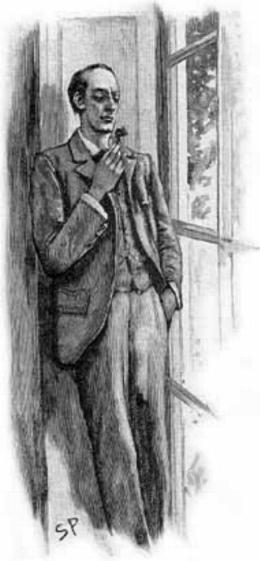
The latest to do this is my poem 'The Second Stain', after the Holmes (erm, Conan Doyle) story of the same title, and the scene portrayed in the Sidney Paget artwork above. It appears in the Winter 2018/2019 issue of the Sherlockian journal extraordinaire Canadian Holmes.
The journal is in print only, but I stuck the poem up on Twitter so you can have a look here: https://twitter.com/stoneandthestar/status/1096921020282388480
(Also, follow me on Twitter. Hint hint.)
Thursday, 31 January 2019
Poetry and TV: From Battlestar Galactica to The Little Drummer Girl
I recently finished watching all four seasons of Battlestar Galactica (the 2000s 'reboot' series - and yes, I am aware that it actually finished ten years ago. I'm also aware that streaming services are pure evil and that I have been watching too many box sets recently.) I'm not quite sure how I got started on this series; it is considered one of the best science fiction TV series ever made, but on the other hand, sci-fi is not usually my thing. However, Battlestar Galactica is really about politics, faith, human identity, the terrible challenges of leadership, conflicting loyalties, and a lot of other fascinating stuff, so it worked for me (as do films like Blade Runner, Inception and Arrival, and the works of Ursula Le Guin). It also turned out to have one of my favourite on-screen relationships of all time - William Adama (Edward James Olmos) and Laura Roslin (Mary McDonnell).
Anyway - in my defense for watching too much TV - I love a good poetry reference in the middle of an episode, and in Battlestar Galactica it happened during the episode 'A Disquiet Follows My Soul' (season 4), when an already bleak series has quickly become about ten times bleaker. Admiral Adama is heard reciting the first few lines of this poem by Emily Dickinson.
THERE IS A LANGUOR OF THE LIFE (Emily Dickinson)
There is a Languor of the Life
More imminent than Pain --
'Tis Pain's Successor -- When the Soul
Has suffered all it can --
A Drowsiness -- diffuses --
A Dimness like a Fog
Envelops Consciousness --
As Mists -- obliterate a Crag.
The Surgeon -- does not blanch -- at pain
His Habit -- is severe --
But tell him that it ceased to feel --
The Creature lying there --
And he will tell you -- skill is late --
A Mightier than He --
Has ministered before Him --
There's no Vitality.
I find it equally moving to imagine that some viewers will hear these words, have no idea where they're from and still be touched by them, while others will catch (or look up) the reference and appreciate the added dimension of intertextuality. Although only a few lines were quoted, the poem as a whole seemed to intersect with the show's themes in many ways.
I'm more used to finding poetry references in novels, short stories, or even non-fiction writing, but it occurred to me that I've come across several wonderful poet/poetry quotations or allusions in a few TV shows recently. In the most recent season of Elementary, the modern Sherlock Holmes adaptation which places Holmes (Jonny Lee Miller) in New York alongside Watson (Lucy Liu), Holmes quotes Rainer Maria Rilke: "When anxious, uneasy and bad thoughts come, I go to the sea, and the sea drowns them out with its great wide sounds, cleanses me with its noise, and imposes a rhythm upon everything in me that is bewildered and confused" (translated by Jane Bannard Greene and M.D. Herter Norton). I thought this was a particularly nice touch because the original Holmes liked to quote Goethe, among others; surely he would have quoted Rilke as well, but that poet's work came a little late for Holmes's original moment in time.
A few spy shows I've watched have also contained intriguing poetry references. This is often also the case in spy novels, and it always seems appropriate because poetry can resemble a code (which does not necessarily mean that it is a code). In the recent TV miniseries adaptation of The Little Drummer Girl by John le Carré, the young actor Charlie (Florence Pugh) reads a Mahmoud Darwish poem as part of the (literally) theatrical love affair she's embarked on:
Did you dance with young angels
while you were dreaming? Did the butterfly
light you up when it burned with the eternal
light of the rose?
(translated from the Arabic by Omnia Amin and Rick London)
In Season 4 of The Bureau (Le bureau des légendes), an exceptional French espionage show, a book of poems by Robert Desnos makes a brief appearance. The surrealist poet Desnos, who perished in Terezín in 1945, was also involved in the Réseau AGIR, a French Resistance espionage network providing information on German bombing facilities. Desnos' work for them involved the creation of false identity papers.
I've also been watching Counterpart, a disturbing spy show about parallel worlds in Berlin (obviously inspired by, but not exactly about, the divided city of the Cold War). Rilke also makes an appearance here, when Howard Silk (JK Simmons) reads his poetry to his wife, who is in a coma:
You, you only exist.
We pass away, till at last,
our passing is so immense
that you arise: beautiful moment,
in all your suddenness...
(translated from the German by Stephen Mitchell)
In another scene, the children's poem 'On the Other Side of the Door' by Jeff Moss is quoted, in one of the most bone-chillingly inappropriately appropriate uses of poetry I've seen on screen:
On the other side of the door
I can be a different me
As smart and as brave, as funny or strong
As a person could want to be.
TV shows (like any other entertainment) are never without their flaws, but the genuine depth added and the respect for literature shown by these poetry references are something I truly appreciated and for which I'll continue to watch.
Thursday, 22 November 2018
Recent Publications: Modern Poetry In Translation & Sherlock Holmes Is Like...
I've recently had a couple of essays (or, a review and an essay) published in print, which for me at least is less common these days, and is always a special delight. (It's not as good for sharing widely, but it has a little extra gravitas and permanence.)
My review of a translation of Benjamin Fondane's Ulysses (translated by Nathaniel Rudavsky-Brody, Syracuse University Press, 2017) appears in 'In a Winter City' (Modern Poetry in Translation, No. 3, 2018). I cannot deny that I am very excited about this. On social media I often see people talking about their "dream journals" for publication: Modern Poetry in Translation is mine. Hopefully I'll get one of my own translations in there some day. I also love Fondane, and it was a privilege to review this excellent translation from the original French. You can access a full table of contents, buy a print copy, subscribe to the journal (which I highly recommend) and read a few of the poems here, but the review and most of the issue is only available in print or by a digital subscription. The focus of this issue, which my review sits outside of, is Hungary and Ted Hughes. It's 20 years since Hughes died, and as one of the founders of MPT, he dreamed of a Hungarian issue but didn't edit one in his lifetime.
The essay is non-poetry, but I am also proud of it - and oddly enough, I managed to quote Ted Hughes in it. It's entitled 'Tinker Tailor Sherlockian Spy: George Smiley', and it appears in Sherlock Holmes Is Like, published by Wildside Press. Edited by Christopher Redmond, this book contains 60 essays comparing Sherlock Holmes and characters of fact and fiction ranging from Loki to The Beatles (and everyone between that you can think of). As I'm quite immersed in spy literature, especially John le Carré, these days, it was a natural choice to pick le Carré's master spy George Smiley for this commission, especially as le Carré has often spoken of the inspiration he found in the Sherlock Holmes stories from a young age. You can buy the book directly from the publisher or from the other usual outlets. Authors weren't paid, and royalties go to the Sherlockian charity The Beacon Society.
Friday, 28 July 2017
Recent (Sherlock Holmes) Poem Publications
I still write poems on other subjects (I promise) but my recent poetry publications have been of the Sherlock Holmes variety.
In late June my poem 'Beekeeper' (which first appeared in The Ofi Press Magazine) was reprinted in Canadian Holmes. This is the journal of the Bootmakers of Toronto, one of Canada's pre-eminent Sherlockian societies. I was a member for several years, during which time I published several reviews and essays in Canadian Holmes - including an essay written when I was in junior high and attempting to prove that Sherlock Holmes was a Canadian. Canadian Holmes also printed a poem I wrote in tribute to Jeremy Brett (my favourite Sherlock Holmes actor, and probably my favourite actor full stop) after his death in 1995. I was 16 and it was either my first poetry publication or one of the first. This was my first publication in Canadian Holmes for something like 15 years, so it's nice to be back.
In early July, Ink Sweat & Tears published my poem 'Watson on Dartmoor', which strictly speaking is a Watson poem rather than a Holmes poem. Watson, a romantic soul, seems quite overwhelmed by the eerie atmosphere of Dartmoor in The Hound of the Baskervilles. But if I'm honest, this poem is mainly me being Watson. I visited Dartmoor a few years ago - it was December, and it was just like the descriptions in the Hound, but more so. It truly feels like a world part of but separate from our own, and so it can never be fully captured.
Image: I Looked Out Across the Melancholy Downs (Sidney Paget, from The Hound of the Baskervilles, 1902)
Sunday, 28 May 2017
In Paris with Paul Celan (and the usual suspects)
A couple of weeks ago - only a few days after returning from a three-week visit to Canada - I went to Paris for the weekend. This year the IIHF World Championship (ie. ice hockey) was in Paris and Cologne, and I was there to meet up with my brother Lucas, who writes articles for the IIHF website.
Paris is one of my adored cities, and every visit there is different. It was strange to be going to a couple of hockey games while there (this time I got to see Slovenia-Belarus and Canada-Switzerland. Canada managed to lose to Switzerland!). At the same time, there always seem to be some common threads, often involving food, art and books. It is Paris, after all.
Besides spending time with my brother, my mission on this particular trip was to go to the Gibert Jeune bookshop on Place St-Michel and to find a few French poetry books. I was looking for Benjamin Fondane's Le mal des fantômes in particular, and possibly something by Yves Bonnefoy and Guy Goffette. This mission was accomplished in a matter of minutes when I found all of the above, but then I also ended up buying a French Sherlock Holmes pastiche (Einstein et Sherlock Holmes) by Alexis Lecaye. These things happen.
On the Sunday, my brother and were walking in the Marais (and, incidentally, avoiding the passation de pouvoir of the new president Emmanuel Macron, which would no doubt have been interesting to see but all the security was a bit off-putting.) On Rue Rambuteau, we stopped in at Les Cahiers de Colette (Colette's Notebooks), a lovely and distinctly intellectual bookshop. I'd say intellectual even by French standards - I find that in France there tends to be an underlying assumption of a certain intellectual level, which is perhaps one reason why some publishers tend not to include blurbs on their books. Editions Gallimard, who published a couple of my poetry purchases, is one of these. They just know you want to buy Yves Bonnefoy and Guy Goffette.
Anyway, in Les Cahiers de Colette I also saw these:
The second photo shows a reproduction of one of Paul Celan's letters. In the montage of faces, his jumped out at me right away. (Of course I recognised Beckett and Kafka, and found that Paul Eluard and André Breton were there too. There are others I feel sure I should know - feel free to identify them!)
I always feel close to Celan, somehow, even when I'm not actively reading him. It is about 20 years since I first read his work, and the writers I encountered in my teenage years have tended to have a particularly strong effect on me. I started reading him more actively about seven years ago, when I was also undergoing some particularly intense moments, so I think that Celan was really sealed into my life. But in Paris, I feel a little closer to him. As well as the knowledge that he walked those streets, there's a feeling that he is more remembered there.
Sunday, 9 April 2017
Poetry lately: Sherlock Holmes, Gardens, Coffee...
I tried to imagine what my own presence in the poetry world would look like if it were a place. The image that came to mind was one of the stone benches carved into the wall by the river in Battersea Park. So, here's an update from my stone bench by the Thames in Battersea Park.
To accompany their latest poets-in-residence-in-gardens program, Mixed Borders, the Poetry School released an e-pamphlet of poems from the 2016 program, in which I took part. A couple of my poems are in this pamphlet and you can find it here.
Josephine Corcoran's lovely online poetry journal And Other Poems has published two of my Sherlock Holmes poems, 'Holmes in Florence' and 'Sherlock Holmes in Antarctica'. You can read them here.
Finally, I wanted to mention what I did on World Poetry Day, which was on 21 March. It's a UNESCO event which doesn't get a lot of attention in the UK compared to National Poetry Day later in the year. However, as they've done in other years, the Austrian coffee company Julius Meinl was running their own World Poetry Day endeavour, Pay with a Poem. A lot of cafes and restaurants in continental Europe were participating, but only a few in London. To my great pleasure, though, one of the cafes where I sometimes go for lunch at work, Manna Dew, was taking part. So I got my free coffee, and this is what I came up with (click on the photo to enlarge):
In the evening on World Poetry Day I also went to the launch of the latest issue of Modern Poetry in Translation, including wonderful readings by Denise Riley and Don Mee Choi. You can listen to a podcast of the event here: http://www.mptmagazine.com/article/podcast-denise-riley-and-don-mee-choi-read-at-the-launch-of-mpt-the-blue-vein-88/
Thursday, 29 December 2016
Richard Adams and the Rabbit World of Literature
Richard Adams, the author of Watership Down and other novels for children and adults, died on 24 December. He was 96 years old.
In a year where celebrity deaths seemed nonstop, his passing was overshadowed moments after it was announced, by the death of actress Carrie Fisher, who sadly was only 60. But it was particularly hard to hear that Richard Adams was gone, given the importance of Watership Down in my life.
As a child I loved talking-animal books, a genre which seems to have gone thoroughly out of fashion (for anyone older than picture book age, at least). It was inevitable that I would read Watership Down. My first attempt was when I was seven or eight and I didn't get very far. I found the style a bit heavy and the action a little too frightening, and abandoned it. When I picked it up again I think I was ten or eleven, and I was hopelessly lost in the best possible way. I followed Hazel, Fiver and their friends out of the Sandleford warren and never looked back.
Many books have moved me, but I think there are only a few (another important one being The Lord of the Rings) which on repeated readings have proved so emotionally overwhelming that they leave me physically drained. I read and re-read Watership Down with cold shivers, with the complete disappearance of the world around me, in tears. Again and again I seemed to find myself physically in the midst of scenes - 'racing through the ochre light' of a thunderstorm ahead of a murderous gang of thugs, trying to save my friend from the deadly snare, staring awestruck at the enormous, silent movement of clouds over the downs. I have finished it and started it again immediately. I have read it several times in a year, although not for quite a few years, I admit. Despite that, its words and images are always within me. My visualisations of the book play through my head sometimes, or I hear the words, or read them behind my eyes.
Watership Down can be read as a really great adventure story blending the fantasy of anthropomorphic animals and their society with accurate details about the natural life of the rabbits and the English countryside they move through. It also has elements of allegory, particularly about the dangers of totalitarian rule. I have, however, read many beautifully written adventure stories, or allegories about fascism (I was even younger when I read Orwell's Animal Farm). What makes Watership Down unique is the way it subtly draws the reader into a literary world. It contains so many literary references that reading it is a remarkable education.
The book is famous for its epigraphs at the start of each chapter, which range from Xenophon to the Bible to Joseph Campbell to Jane Austen to Dostoevsky to WH Auden - and many others. In subsequent years, every time I have come across one of these quotations within the work of literature it was taken from, I feel a kind of time-shock and I am in Watership Down again. I discovered the World War II poet Sidney Keyes through one of these epigraphs, and he has become one of my favourites. Robinson Jeffers' poem 'Hurt Hawks' also came to me in this way. But the epigraphs are far from being the only references. Within the text itself, Richard Adams compares the adventures of the rabbits to those of Odysseus. The poem recited by Silverweed, the eerie rabbit-poet who appears in one of the book's most sinister passages, contains the phrase 'the heart of light, the silence', which is a quotation from TS Eliot's The Waste Land. (The blunt Bigwig refers to Silverweed as 'that lop-eared nitwit of a poet'.) There are glancing references to Sherlock Holmes and Robin Hood, to 'Everyone Sang' by Siegfried Sassoon, to the Psalms, and more.
Watership Down has thus been a kind of slow-release of literature into my bloodstream throughout my life. I have finally realised that this, more than anything else, has made it so important to me. It has created echoes everywhere and has accustomed me to walking through a world where I see and hear literature in everything. It seems that this is how Richard Adams saw the world, or at least how he wanted his readers to see it. I am used to carrying quotations and stories and references and poems with me wherever I go, seeing and hearing them everywhere. And because of this book, I know that it's ok to do so. Some of us see the world in this way, and it enriches us. It makes life a little easier and a little more beautiful. It helps us to understand the interconnectedness of things, to see cause and effect, and to act with compassion and understanding. It shows me that understanding my connections to literature is a way of understanding connections to the world around me.
I don't think Watership Down, which first appeared in 1972, would be published now. If it were, it would be in a massively butchered form. The style would not pass an editorial team today. It would be viewed as too dense and difficult, too prescriptive of the pantheon of literature, too paternalistic. Most books aimed at adults today don't have a tenth of the complexity and beauty of Watership Down. But despite that complexity, it is also far less didactic than many books published now, which tend to hit the reader over the head with a dumbed-down style and a painfully obvious worldview. Richard Adams wrote this book at a time when authors still allowed their convictions and principles to imbue their writing, but not to overwhelm it. This is rare today, but it's good to know that so many people still love his work.
Goodbye and thank you, Richard Adams.
Sunday, 27 November 2016
Vanguard #2 Poetry Anthology
In May of this year I read at Vanguard Readings, a monthly series (currently at the Peckham Pelican in south London) featuring sometimes poetry, sometimes prose, and sometimes both. These evenings are organised by Richard Skinner (novelist, poet and director of Faber Academy) and they have a friendly, non-hierarchical and varied vibe.
I was then delighted to be included in #2 Poetry Anthology, published by Vanguard Editions and featuring poets who have appeared at Vanguard. I'm in exceptionally good company in this anthology, with poets such as Catherine Ayres, Ian Duhig, Victoria Kennefick, Charles Lauder Jr, Kim Moore, Dan O'Brien, Rebecca Perry, Tara Skurtu, Kelley Swain and Tamar Yoseloff, among many others.
To find out which poem of mine is included you will have to buy the anthology, but I can tell you that it is one of my Sherlock Holmes poems.
Tuesday, 29 December 2015
'Sherlock': A BBC Sherlock Poem
'Dancing Men' from the 2015 Sherlock Holmes exhibition at the Museum of London. Photo by Clarissa Aykroyd
Messrs Cumberbatch and Freeman are just about to return to our screens as Sherlock and John, although this time around they will really be 'Holmes and Watson', in a one-off Victorian episode. I'm looking forward to seeing whether they can come close to the greats - Jeremy Brett, David Burke and Edward Hardwicke.
I've been writing poetry about Sherlock Holmes this year - inspired by many different aspects of the stories and the different portrayals over the years - and a few of the poems were published. So to end the year, here's another poem, this one based on the Cumberbatch/Freeman modern-day series.
SHERLOCK
after BBC Sherlock
Sherlock's mouth is a typewriter: he's spinning out the tale to the sharp end of his breath.
He'll cut and make it neat with his cheekbones.
Sherlock is downloading your brain to his hard drive.
He is uninterested in your heart, except when it threatens to break the machine, your soul.
Sherlock's pale eyes have narrowed to tiny keyholes.
He may have to kill you, but he will look so good while doing it.
Sherlock is talking to a skull, but he may talk to you if you stick around.
He's the mind of this city, but you keep him from the fall with your words, your light.
© Clarissa Aykroyd, 2015
Sunday, 13 December 2015
New Poems Published and 2015 Readings
Norwich, November 2015. Photo by Clarissa Aykroyd
I recently had a couple of new poems published. One of these, 'Beekeeper', appears in the Mexico City-based The Ofi Press and you can read it here: http://www.ofipress.com/aykroydclarissa.htm
The other poem, 'Seventeen Steps', appears in Issue 10 of Lighthouse, a journal focusing on new writing by up-and-coming writers - and ah, the rarer delight of being published in print! You can purchase a copy of this issue here: http://www.gatehousepress.com/shop/anthologies/lighthouse-issue-10/
Both of these recent publications have been poems about (or inspired by) Sherlock Holmes. If this is starting to look like a theme, that's because it is a theme. Watch this space.
Another recently lovely thing was appearing on the list of the Best UK Poetry Blogs of 2015 at Matthew Stewart's highly regarded poetry blog Rogue Strands. You can find me in very good company here, with many other blogs that I would recommend: http://roguestrands.blogspot.co.uk/2015/12/the-best-uk-poetry-blogs-of-2015.html
Finally, here's a list of the poetry readings I gave/took part in this year. I have a couple at least coming up in 2016, which I think will be another good poetry year.
- June - London: reading at Red Cross Garden as a poet-in-residence for the London Open Garden Squares Weekend
- July - Cambridge: reading at The Missing Slate anthology launch event, at the Judith E Wilson Studio
- September - London: reading at Red Cross Garden for their annual Flower & Vegetable Show
- October - London: reading with The Quiet Compere at the Hackney Attic
- November - Norwich: reading at the Lighthouse launch event at the Bicycle Shop
Wednesday, 4 November 2015
The Sign of Four, the City In My Head and the Map of Poetry
John Atkinson Grimshaw, The Strand, 1899.
I recently re-read The Sign of Four (or The Sign of the Four) by Arthur Conan Doyle - both the second Sherlock Holmes novel, and the second Sherlock Holmes story ever written (in 1890), before the short stories that made Holmes and Doyle really famous.
The Sign of Four has often (not always) been my favourite of the four Sherlock Holmes novels. Since I moved to London, it has taken on more (or other) significances, and especially since I moved to south London over five years ago. The Sign of Four is a real London book and a great deal of it happens in south London - near where I live, no less. There are key scenes which occur around Nine Elms and Millbank, and when I lived in Stockwell (by Larkhall Park) I was quite delighted by this moment:
Sherlock Holmes was never at fault, however, and he muttered the names as the cab rattled through squares and in and out by tortuous by-streets.
"Rochester Row," said he. "Now Vincent Square. Now we come out on the Vauxhall Bridge Road. We are making for the Surrey side, apparently. Yes, I thought so. Now we are on the bridge. You can catch glimpses of the river."
We did indeed get a fleeting view of a stretch of the Thames with the lamps shining upon the broad, silent water; but our cab dashed on, and was soon involved in a labyrinth of streets upon the other side.
"Wordsworth Road," said my companion. "Priory Road. Lark Hall Lane. Stockwell Place. Robert Street. Cold Harbour Lane. Our quest does not appear to take us to very fashionable regions."
For a couple of years I was often in the vicinity of Coldharbour Lane, and it's still not a very fashionable region. I think of The Sign of Four every single time I find myself down there. Such is the power of literature at an impressionable age.
Other scenes take place around Norwood. Conan Doyle lived there for a time, but apparently the evidence suggests that he did not know London as well as you might conclude from the Holmes stories, and that he may have relied quite heavily on maps. This actually makes sense, and it works quite well for the reader. There are some extraordinary set-pieces in the Holmes stories - in The Sign of Four, one that comes to mind is this foggy description on the Strand:
Down the Strand the lamps were but misty splotches of diffused light which threw a feeble circular glimmer upon the slimy pavement. The yellow glare from the shop-windows streamed out into the steamy, vaporous air, and threw a murky, shifting radiance across the crowded thoroughfare. There was, to my mind, something eerie and ghost-like in the endless procession of faces which flitted across these narrow bars of light, - sad faces and glad, haggard and merry. Like all human kind, they flitted from the gloom into the light, and so back into the gloom once more.
There is also a very wonderful pursuit along the Thames, among other scenes. I love the south-London-ness of this book, the sense of staying in the "great cesspool" but moving into something wild and vast - north-of-the-river folk still see south London in this way. A lot of the dark deeds of the Holmes tales take place in south London or the southern outskirts of London.
There is something about the "map" quality of The Sign of Four, and the way it careers around London, which I associate very strongly with my own perceptions of the city. I feel like I carry London in my head - a map, but more than a map. In certain areas, it's as though I can see all the layers superimposed at once - past, present and future times, stories, songs, and more. And wherever I am in London, I feel an awareness quivering from other parts of the city - places I know, people I care about, all moving around and past and through each other. The way Doyle wrote, in map-speak combined with dramatic set-pieces, allows readers to fill in the gaps with their own London. I did this with his stories before I ever visited London, and I have continued to do so ever since, with the real London and with my own perceptions of it from the past and present, all layered and still present to each other.
Does this have a relevance to poetry? Well, I think that poetry is a certain kind of free-association combined with great precision, and to me there is something very maplike about it. The connections which turn into the flashpoints of poems are like transport links and connections around the city, often moving with speed to very disparate parts of London. And the map of any given poem - in physical space, emotional space, and time - builds and superimposes like the palimpsest of London in my head.
And for anyone who's stuck with me to the end of this entry - are there poems to accompany these thoughts? I had thought that this might be a moment to discuss London poems, but instead two great poems about maps and water (on one level, and among other things) came to mind. I have linked to them below. Maps and water are actually both very important to The Sign of Four, so this is appropriate. Beyond that, perhaps you will have to try and trace my train of thought with the clues I have left, and if you can do that, I congratulate you, my dear Watson.
DIVING INTO THE WRECK (Adrienne Rich)
MAPPING THE DELTA (George Szirtes)
Sunday, 28 June 2015
Poetry and Beyond in the Czech Republic
Prague, May 2015. All photos by Clarissa Aykroyd
A little over a month ago I was in Prague with my brother - we had almost a week together and also visited the nearby towns of Kutna Hora and Plzeň. It was my first time back in the Czech Republic after eleven years. In 2004 my brother was there working with the World Hockey Championships (er, that's 'ice hockey') and we were there for the same reasons again this year. So hockey was on the menu (including Canada slaughtering Russia 6-1 for the gold medal), as well as fairy-tale-like castles and Art Nouveau buildings, all the meat and dumplings I could eat, and even beer (which normally I never touch because I don't like the taste.)
Poetry is never off the menu, and that's especially so in a country like the Czech Republic. We had a tour one day with a man named Milos Curik, who turned out to be absolutely one of the most interesting people I have ever met. He showed us some beautiful and fascinating hidden corners of Prague, which was a good thing because as lovely as Wenceslas Square and Charles Bridge are, they are insanely rammed with tourists. Milos was part of the Beat generation and knew the American poetic icon Lawrence Ferlinghetti, as well as having met Allen Ginsberg and many others. He'd done everything in his life from organising Velvet Underground concerts in Czechoslovakia to studying funerary art - interspersed with many run-ins with the police during Prague's complex history - and he had evidently done it all with panache. Milos showed us a street where Ginsberg had stayed in Prague and told us about how Ginsberg had written the poem 'King of May' after being honoured as such by Czech students in 1965. (He wrote the poem on his flight from Prague to London.) Milos specialises in arts and music tours of Prague, and told us that later this year he will be showing around some poets on a tour of Prague taking in sights related to Seamus Heaney's visits to the city. (Heaney had very strong connections to Central and Eastern European poetry, and I came across this interesting article: http://radio.cz/en/section/books/a-certain-parallel-seamus-heaney-and-the-czechs)
Here are a couple of photos from that tour. The first is of that street where Ginsberg stayed, a semi-hidden but lovely area near the castle:
This is a table and chairs, attached to a tree, featuring a quotation from Vaclav Havel. There are a number of these in different cities now, known as 'Havel's Place'. Of course, Havel was one of the architects of the Velvet Revolution and was the first president after the fall of Communism, but he was also a playwright and, less famously, a poet.
In Kutna Hora, we saw a cathedral with a very unusual 'tent' roof, went down a silver mine, and emerged subdued from the eerily strange Sedlec Ossuary, or bone church. Over the years, Kutna Hora has attracted many poets, writers and artists because of its spooky, romantic atmosphere, and it now has a poetry festival in September. The poet-author of the Czech national anthem was born in this town. Here's a photo of the cathedral:
Plzeň was a real working town with a very interesting depth of history. I was pretty much forced to drink beer there, because of the Pilsner brewery, in whose icy depths we spent some time. We also saw this remarkable mural featuring many famous figures associated with the town's history. In this detail, the young man on the left in the cape is Josef Kajetan Tyl, who lived in the first half of the 19th century. He was another playwright who was also a poet. (Rather wonderfully, it often seems in the Czech Republic as though everyone is also a poet.) Rainer Maria Rilke apparently acknowledged Tyl's influence.
In Plzeň I was also very happy to see this set of characters in the wonderful Puppet Museum (puppetry is very important to the culture of Bohemia.) They were for a Hound of the Baskervilles puppet show, and yes, that's Holmes and Watson at the top!
With thanks to Czech Tourism
Thursday, 25 June 2015
New Poem Published: 'Sherlock Holmes in Red Cross Garden'
Sherlock Holmes, from The Naval Treaty, by Sidney Paget
The Pakistan-based literary and arts journal/website The Missing Slate, who have previously published my work, have just published my poem 'Sherlock Holmes in Red Cross Garden' .
This poem is, of course, one of the four that I wrote for my recent residency with Red Cross Garden, organised by the Poetry School and the London Open Garden Squares Weekend. It was the first poem that I wrote, since Holmes walked into the garden in a very definite way not long after I first visited it and started reading and thinking about it.
I would call this quite a personal poem, though it's hard to explain how exactly. Sherlock Holmes has accompanied me for so much of my life (since I was seven years old, I think) that he has become a part of me in a way I wouldn't say any other fictional character has (and where Holmes is, there Watson is as well, usually). He's led me down so many literary, figurative and real pathways that whenever he shows up, he remains both familiar and fascinating - and also, a kind of mirror for myself.
When I had written the poem I realised that there was an undertone of anxiety in it which surprised me a little. This is not a Holmes in the best frame of mind, I think. He may be preoccupied with the details of an unspecified case, but Watson isn't wrong when he suspects Holmes's preoccupation goes beyond that. I think he is awaiting a confrontation, to come sooner or later, and he is looking for solace amongst the flowers. "What a lovely thing a rose is" is directly from the story The Naval Treaty, in which Holmes speaks unexpectedly and passionately about the beauty and significance of flowers. It is also a passage which indicates that Holmes was no atheist, which in modern times he is often popularly supposed to be. "There is nothing in which deduction is so necessary as in religion," he says. "Our highest assurance of the goodness of Providence seems to me to rest in the flowers."
Saturday, 21 March 2015
Poetry Is Everywhere (Like Spies and Sherlock Holmes)
Portrait of Sherlock Holmes by Sidney Paget
Amidst being sick on and off in February and early March, a welcome trip to Barcelona, and all the vicissitudes of life which have contributed to not writing in here much lately, I've started reading novels again. Not that I ever stopped. I seriously doubt I'll ever hit the several-books-a-week levels of my childhood again, but I don't read as much as I used to, and that's particularly true when it comes to novels. Poetry takes up a lot of my headspace, and besides that, I haven't lately come across a lot of novels that I badly want to read. (Often, when I read prose these days, it's non-fiction about travel or current affairs, and often far more interesting than the average contemporary novel.)
Having immersed myself in a few novels recently, I was reminded that they can have a kind of calming effect on me that poems don't necessarily have. Of course, individual poems can be reassuring and uplifting, if that is their aim. But poetry has a couple of attributes which make it rather more stimulating than calming: it tends to be emotionally high-keyed, and in any case, reading various poems requires a constant sort of changing of emotional gears. Even a thrilling novel, with many twists and turns, is more like floating down the same river for a long period of time, rather than leaping from the river to the ocean to the mountaintop.
I couldn't get away from poets while immersing myself in various novels, even if I'd wanted to. Hilary Mantel's A Place of Greater Safety, a superb novel about the French Revolution, accompanied me for a few weeks. One of its hundreds of characters was Louis de Saint-Just, a leader of the Revolution, who fell along with Robespierre. He was also the author of the epic poem Organt and the novel often makes reference to his status as a poet.
I have also been catching up on Laurie R King's series about Mary Russell and her partner, Sherlock Holmes - yes, you read that correctly. These rather wonderful books (although they vary considerably in quality, as series fiction often does) constitute my favourite Holmes stories by someone other than Sir Arthur Conan Doyle, although it's fair to say that in Holmesian terms they are rather iconoclastic. I was three books behind, although one of the three has just been released. Pirate King, a rather silly episode in Holmes and Russell's careers based on The Pirates of Penzance, rose in my estimation when I realised that it featured the Portuguese poet Fernando Pessoa as a major character. Russell comments on Pessoa, in a letter to Holmes: "He carries about him an air of distinction, as if his mind is on Greater Things than translating for a moving picture crew. (He is a poet, which you might have guessed.)" Garment of Shadows, which follows on directly from Pirate King, didn't contain much about poets in the story, but the title is taken from the work of a Persian-Arabic poet, Ebn El Roumi (who, as far as I can tell, isn't the same as the much more famous Rumi who wrote a few hundred years later):
...the breath of Chitane
Blows the sands in smoky whirls
And blinds my steed.
And I, blinded as I ride,
Long for the night to come,
The night with its garment of shadows
And eyes of stars.
Finally I have moved on to the new novel, Dreaming Spies, which I haven't finished yet. Poetry features very prominently here. The title is a pun on Matthew Arnold's "city of dreaming spires" (Oxford), and there are other references to Arnold's work. The chapters have epigraphs in haiku form, and above all, a priceless book of poetry by the great Japanese haiku poet Matsuo Basho plays a key role in the novel. I'd really recommend that anyone interested in this series starts with the first and best book, The Beekeeper's Apprentice, but all the poetic references in these three latest have added a lot to my enjoyment.
Speaking of Sherlock Holmes, I finally went to the wonderful exhibition at Museum of London which has been on for some months, and also attended a discussion by the curators. This week, the title of that Laurie King novel about Sherlock Holmes, Dreaming Spies, was a keyhole opening which my mind's eye peered through to see that poetry (and poets), Sherlock Holmes and spies have something in common: they're everywhere. Holmes, to me, is something in the way of a guardian spirit of London, always somewhere in the back of my mind as I move through the city. While travelling on the Underground, I sometimes try to guess who in my vicinity might be working as a spy. And then I remembered two favourite quotations. One is from the great American poet Anne Sexton: "A writer is essentially a spy./Dear love, I am that girl." The other is from Polish poet Wojciech Bonowicz, who was in part quoting a Polish critic: "The poet...is one who opposes the fossilization of language, one who attends to its fissures. In this way the poet remains a secret agent of elusive sense."
Tuesday, 14 January 2014
"Oh Sherlock, Sherlock, He's In Town Again": Sherlock Holmes in Poetry
Sherlock Holmes and Dr John Watson as portrayed by Sidney Paget
If you have any interest in detective/spy stories and shows, television, modern updates of old stories, popular culture, or just a famous character named Sherlock Holmes, you may have heard that the latest series of the BBC's Sherlock series has just wrapped up. As Sherlock's big brother Mycroft once said to Watson, "I hear of Sherlock everywhere since you became his chronicler": the current Watson's chronicles appear in blog form, not in the Strand magazine, but not a lot has really changed. Sherlock Holmes is once again the talk of the town, but for me he never really goes away; he and Watson are always around, just a little more in or out of focus at different times. While Jeremy Brett, along with his Watsons David Burke and Edward Hardwicke, will probably always be my favourite screen Holmes and Watsons, Benedict Cumberbatch and Martin Freeman are superb and entertaining and the modern update is incredibly clever. (And yes, in case you're wondering - I totally heart Benedict.)
I have devoted quite a few conscious and subconscious hours to the mystery of why Sherlock Holmes is so important to me and I have essentially concluded that I am a bit too close to him to ever be able to really puzzle it out. I suppose we have some early influences that become so deeply woven into our lives that there's no way to really discern their exact nature, and in my case some of those influences were always going to be literary. I think I was seven when Holmes entered my life, both in the original stories and in Jeremy Brett's version. I was particularly obsessed through my teens, and it's all returned full force with years of living in London and with his recent upsurge in popularity; it's kind of nice that more of my friends "get it" at the moment. I know that when I was younger I both identified with Holmes (perhaps the fate of a few angsty misfit teenagers with a love of English literature) and had a crush on him; later on I realised that I actually identified more with Watson - less hyper-intelligent, emotionally locked up and rude; more loyal, anxious and both down-to-earth and adventurous. However, I think even now I probably alternate between identifying with Holmes and identifying with Watson, depending how I'm feeling. (Watson is the healthier option.) They could represent two sides of one personality, I suppose.
I do know that my Holmes is very much the guardian spirit of a place, London. Even when he goes out to the countryside, which he often does, he somehow represents London. I suspect that the intensity with which Holmes has remained in my life has a lot to do with place, perhaps more than anything else. The success of the current series, set very firmly in our modern day but also in London, tells me that place is more important for Holmes and Watson as convincing characters, than time. "It is my belief, Watson, founded upon my experience, that the lowest and vilest alleys in London do not present a more dreadful record of sin than does the smiling and beautiful countryside," Holmes comments one lovely morning as they head out to the countryside to investigate the sinister Copper Beeches (thus totally ruining Watson's fun day out on the train.) Spoken like a true Londoner, is all I can say.
Rather to my surprise, I've gradually realised that although there is a fair amount of cute-but-painful Holmes-related doggerel out there, there is also some genuinely beautiful and thought-provoking poetry inspired by the great detective, as well as some that is really funny and clever. I wrote some time ago about T S Eliot's 'Macavity, the Mystery Cat', which is a real classic and based on Holmes's arch-enemy Professor Moriarty. A less-known but also extremely funny work, written for Holmes's original miraculous return from the dead more than 100 years ago, is P G Wodehouse's 'Back to His Native Strand' (1903):
Oh Sherlock, Sherlock, he's in town again,
That prince of perspicacity, that monument of brain.
It seems he wasn't hurt at all
By tumbling down the waterfall.
That sort of thing is fun to Sherlock.
(from 'Back to His Native Strand', P G Wodehouse)
As a relative latecomer to the delights (if that's the right word) of Sylvia Plath, I was astonished to discover not that long ago that one of her poems, 'The Detective', refers to Holmes and Watson. I read it as a poem about metaphorical death, perhaps due to emotional cruelty by someone close to the victim. Ominously, it concludes:
Then the dry wood, the gates,
The brown motherly furrows, the whole estate.
We walk on air, Watson.
There is only the moon, embalmed in phosphorus.
There is only a crow in a tree. Make notes.
(from 'The Detective', Sylvia Plath)
Much more recently, I found out that Jorge Luis Borges wrote his own absolutely amazing 'Sherlock Holmes', a meditation on the relationship between the creator and the created, among other things. In this translation by Willis Barnstone, it opens:
Not of a mother born, no elders known,
he was like Adam and Quijano. He
is made of chance. Near or immediately
the whim of varied readers guide his tone.
It isn't wrong to think that he was born
a moment when the Other One may tell
his story, and he dies with each farewell
of memory in us who dream him.
(from 'Sherlock Holmes', Jorge Luis Borges, translated from Spanish by Willis Barnstone)
And I also discovered this beautiful poem by Susan Fromberg Schaeffer, 'Sherlock Holmes', where the poet uses the figure of Holmes to meditate on certainty versus uncertainty and ambiguity.
SHERLOCK HOLMES (Susan Fromberg Schaeffer)
I wanted to conclude with this most famous of Holmes poems, Vincent Starrett's '221B'. Although it isn't poetically quite in the class of the above works, it is beloved of Holmes fans and it represents a lot of what we love about the stories and the characters. (I've been advised that copyright in Vincent Starrett's estate is sufficiently murky that I shouldn't worry about reproducing the poem, but if anyone wants to hunt me down with an air gun like Moriarty's henchman Colonel Sebastian Moran, please think about just dropping me a line, first.)
221B (Vincent Starrett)
Here dwell together still two men of note
Who never lived and so can never die:
How very near they seem, yet how remote
That age before the world went all awry.
But still the game's afoot for those with ears
Attuned to catch the distant view-halloo:
England is England yet, for all our fears -
Only those things the heart believes are true.
A yellow fog swirls past the window-pane
As night descends upon this fabled street:
A lonely hansom splashes through the rain,
The ghostly gas lamps fail at twenty feet.
Here, though the world explode, these two survive,
And it is always eighteen ninety-five.
Sunday, 6 January 2013
England's West Country: Coleridge, Shelley, Mayne...and Baskerville Hounds
At the end of December a friend and I spent a few days in the West Country - mainly Devon, with a quick foray into Cornwall and Somerset. Reports that Devon was an entirely underwater county proved to be more or less unfounded, and although there was definitely quite a lot of rain, there were also many sunny intervals. Most importantly, Dartmoor featured some satisfyingly foggy moments.
Dartmoor has probably been on my must-visit list ever since I read Conan Doyle's The Hound of the Baskervilles (a long time ago) and the only slightly less-known story 'Silver Blaze', both of which feature a fairly well-known detective named Sherlock Holmes. I would be at least mildly interested in visiting almost every place I have ever come across in a book; even if they are not terribly exciting places in themselves, the literary associations will add and add and add to them. If the place is beautiful and wonderful in itself, though, few things could be more wonderful.
Approaching Dartmoor by train with Sir Henry, Dr Watson describes what he sees in vivid terms: "Over the green squares of the fields and the low curve of a wood there rose in the distance a gray, melancholy hill, with a strange jagged summit, dim and vague in the distance, like some fantastic landscape in a dream." Later, as they approach Baskerville Hall by carriage:
We had left the fertile country behind and beneath us. We looked back on it now, the slanting rays of a low sun turning the streams to threads of gold and glowing on the red earth new turned by the plough and the broad tangle of the woodlands. The road in front of us grew bleaker and wilder over huge russet and olive slopes, sprinkled with giant boulders. Now and then we passed a moorland cottage, walled and roofed with stone, with no creeper to break its harsh outline. Suddenly we looked down into a cuplike depression, patched with stunted oaks and firs which had been twisted and bent by the fury of years of storm. Two high, narrow towers rose over the trees. (from The Hound of the Baskervilles)
My friend, less enthused by Holmesiana than I am and a little tired of driving, still drove me obligingly all over the moor, and the above descriptions were exactly what I found. At one point we plunged into a cloud; later, in a moment of madness, I braved the wind and rain and ran up the eerie and beautiful Haytor. Here is a picture:
I was struck by how utterly vast Dartmoor seemed. Its skies were wider than I imagined; maybe it's partly that TV screens make it small, but I felt that I had to go there to really understand. Although we did not drive all around its edge, I had a very strange feeling that the moor was larger inside its boundaries than ordinary physical dimensions would permit, and that I had passed into a place which was utterly detached from the soft and lovely countryside around it.
On a more poetic note, the West Country held more poetry associations than I had imagined. In Lynmouth, we found Shelley's Hotel, although this may or may not have been the exact building where Percy Bysshe Shelley and his young bride stayed during their honeymoon. I was even more fascinated by the Coleridge associations. We had lunch in Porlock, a beautiful town on the north coast which yielded a sinister Person from Porlock, who disturbed the drugged-up and dream-haunted Samuel Taylor Coleridge and prevented him from giving us the fullest possible account of 'Kubla Khan'. Near the Quantock Hills, we stopped briefly at the Coleridge Cottage, where he wrote 'The Rime of the Ancient Mariner', among others. Here is a picture:
We based ourselves in a flat kindly lent by a colleague, in a very small town called Hatherleigh. I discovered that this was the birthplace (or at least place of baptism) of Jasper Mayne, a clergyman, translator and poet who lived in the seventeenth century. This rather fascinating poem, 'Time', is his:
TIME (Jasper Mayne)