Showing posts with label LAMDA. Show all posts

Friday, 9 May 2014

New Publications: Aviators and Anthologies


First Flight by Brocken Blue. Used under Creative Commons license


I was recently thinking that this blog feels slightly in the doldrums. Having recently re-read some of my earlier entries, as much as two and a half years ago, I wondered if I had more to say about the poems then. On the other hand, some blogs don't even last this long. And I never wanted to be prescriptive about the content; it can be a bit of everything, as long as there's poetry.

On the bright side, this year hasn't been bad at all (by my standards, anyway) for publishing bits and pieces and for writing poems. I'm very pleased about my most recent publications, for different reasons.

My poem 'As though we lived falling out of the skin into the soul' appeared last month as one of the weekend poems on The Missing Slate. This fascinating arts journal is Pakistan-based with an international staff and outlook. The poem was inspired by this extremely moving account on English PEN of the poet Ivo Machado and the English pilot, which troubled and haunted me from the moment I read it. Sadly, I suppose the missing Malaysia Airlines flight may also have been somewhere in the background, too. Pablo Neruda provided inspiration with the title and the quote.

The other publication actually was the culmination of years of work. In my day job working on the publishing program for LAMDA's examinations in speech and drama, I and some of my colleagues have been developing new Verse & Prose and Acting anthologies for use with the new syllabuses over the next few years. They have finally been published. If there are certain lessons I have learned from working on anthology development, it is that permissions are an absolute nightmare, and you can expect plenty of spanners in the works at the last minute. On the bright side, the new books look great and I think the content is really dynamic and varied. A couple of my poems made it into the Verse & Prose anthology, one of them being 'Andalucia', first published in Shot Glass Journal. The other is a poem called 'London, 7 July' which I wrote just after 7/7 and just before moving from Dublin to London. It is still very reflective of my emotions in the moment and I have to admit that when I see it in print, a part of me feels quite exposed.

The Verse & Prose anthology also features many of my favourite authors and favourite works, including the following, among others:

ELSEWHERE (Derek Walcott)

GARDEN STATUES (Al-Saddiq Al-Raddi)

RUBAIYAT (Mimi Khalvati)


Tuesday, 15 April 2014

Christopher Marlowe and The School of Night


Anonymous portrait believed to be of Christopher Marlowe, 1585. Corpus Christi College, Cambridge


Last week I went to a LAMDA student production of The School of Night by Peter Whelan, an edgy, dark play about Christopher Marlowe and his rivalry with William Shakespeare. The play was full of fascinating character studies and the acting was excellent, even remarkable, which I've come to expect from LAMDA student productions (and not just because I work there.)

"There are two realms we can live in...one of power, the other of poetry. You can't live in both! The poets must always stand against the powerful...otherwise truth would die!" exclaims Marlowe in The School of Night. At a later point Marlowe says that he wants to achieve a republic of poetry and power, but he never seems quite clear whether he wants to do this by means scientific, occult, or literary. I felt the play did capture something of Marlowe's complex nature and of the intense, violent atmosphere of the times. When I studied Shakespeare and Marlowe in school, I remember feeling that reading or seeing Shakespeare was like watching the most powerful, immersive cinema imaginable - a three-dimensional cinema of all five senses, of the intellect and the spirit. Marlowe, by contrast, had a kind of hard, incandescent brilliance.

Here you can read an excerpt from Hero and Leander: "It lies not in our power to love or hate". Hero and Leander makes an appearance in The School of Night.


Thursday, 19 April 2012

Jack Prelutsky's 'Be Glad Your Nose Is On Your Face': I Finally Discover Children's Poetry


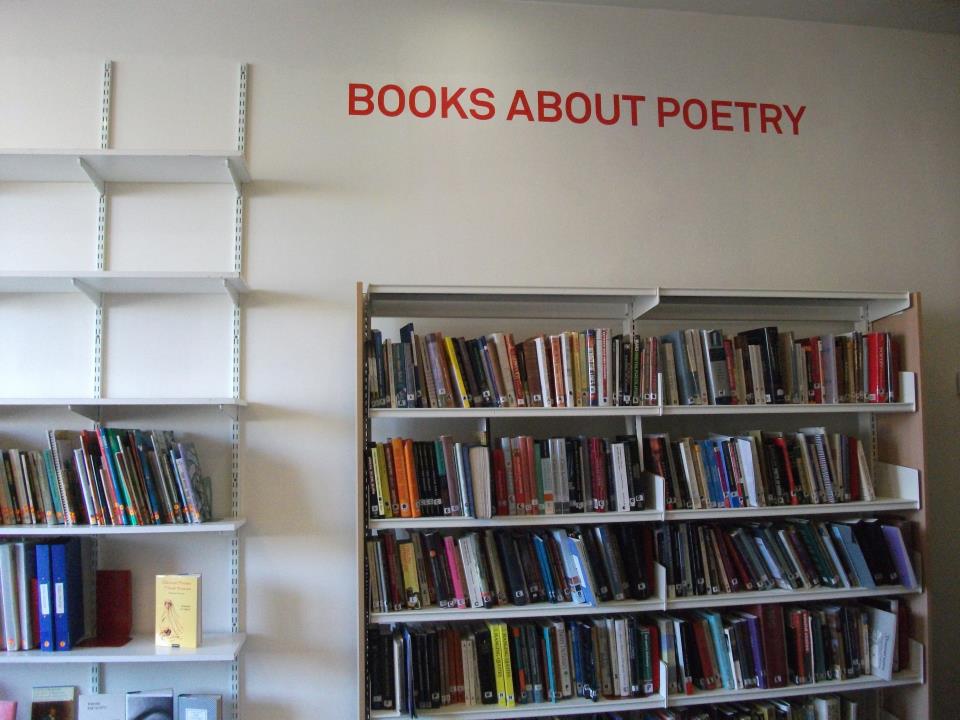
I took the above picture at the Saison Poetry Library at London's Southbank Centre, which includes a children's poetry section.

It would be an understatement to say that I grew up with books. I don't have a great many pre-reading memories, because I was three years old when I started to read. However, everyone in my family was pretty much a prose enthusiast. Famous poetry was around here and there, and I dipped curiously into my mother's old volumes of Eliot and Auden, but didn't get very far for a long time (when confronted with The Waste Land at a relatively young age, that's not surprising.) My brother and I got through scores of novels.

We started taking music lessons through the Orff Approach (incorporating a lot of percussion and play) when we were quite young, and later moved on to other instruments, so that was where we started with our love of music and rhythm. (My brother and I still both love classical music, but we REALLY love our Def Leppard and Van Halen, which our parents have been remarkably tolerant of, especially our classical-music enthusiast father). But poetry didn't make a great impact. Of course, poems and songs pop here and there in children's stories. There were moments in The Wind in the Willows, Watership Down and The Hobbit. I also enjoyed Edward Lear, though I'm not sure I ever made it all the way into his surreal world, and some of Robert Louis Stevenson's poems were wonderful. Still, we concentrated on novels (favouring the epic and medieval), and poetry didn't enter into it a great deal. I started reading Yeats fairly seriously when I was 14 or 15, and my poetic fate was gradually sealed after that.

It is only in very recent years that I have really learned about the wider world of children's poetry. I worked for a major children's publisher for a while, and although they mainly published fiction, there was the occasional book of poetry. Gradually, I started to become more familiar with some names in children's poetry. For the past two years, I have worked on publications for LAMDA Examinations, who offer exams in speaking verse and prose (among others) to the public. Part of my work involves developing the next round of anthologies for use in exams, and as a result I've read through copious amounts of children's poetry. At the mid and higher levels the poetry is more adult-level, but at the younger levels - well, there are a great many poems about cats, the sea, witches, dogs, wind, school, cats, and, er...cats. Still, although the subjects may seem more limited, there can be a pretty wonderful variety. The colleague with whom I've worked on developing the anthology is an expert on children's poetry, so she had more suggestions than we knew what to do with.

It's been a nice kind of education. Until now I never knew much about the children's poems of Jack Prelutsky, Ken Nesbitt, Grace Nichols, Dionne Brand, Roger McGough or Brian Patten. Some of these poets write for adults as well, of course. Children's poetry tends toward the humorous, and that's still not one of my preferred areas for poetry, so perhaps that had something to do with my relative disinterest when I was young. It is an art all its own, though - that is obvious. People who think writing for children is easy are so very, very wrong, and poetry is no different.

I've particularly enjoyed discovering Jack Prelutsky, who was named the first US Children's Poet Laureate by the Poetry Foundation. He is extremely funny and has an incredible ear for poetry which flows smoothly and bounces off the tongue. Here is one of his best poems, 'Be Glad Your Nose Is On Your Face'.


Be glad your nose is on your face,
not pasted on some other place,
for if it were where it is not,
you might dislike your nose a lot.


I recently saw this on a list of the greatest poems of all time - a list which was definitely rather US-centric, but still, an interesting and worthy choice...

Thursday, 1 December 2011

'The Rime of the Ancient Mariner': Coleridge Goes To Antarctica and Gets Back In Time to Ruin One Out of Three Wedding Guests' Day


From THE RIME OF THE ANCIENT MARINER (Samuel Taylor Coleridge)


And now the storm-blast came, and he
Was tyrannous and strong;
He struck with his o'ertaking wings,
And chased us south along.

With sloping masts and dipping prow,
As who pursued with yell and blow
Still treads the shadow of his foe,
And forward bends his head,
The ship drove fast, loud roared the blast,
And southward aye we fled.

Listen, stranger! Mist and snow,
And it grew wondrous cold:
And ice mast-high came floating by,
As green as emerald.

And through the drifts the snowy clifts
Did send a dismal sheen:
Nor shapes of men nor beasts we ken--
The ice was all between.

The ice was here, the ice was there,
The ice was all around:
It cracked and growled, and roared and howled,
Like noises in a swound!


'The Rime of the Ancient Mariner' is possibly Samuel Taylor Coleridge's most famous work, although personally I probably still prefer 'Frost at Midnight' and especially 'Kubla Khan'. This is only a very brief excerpt from the very long original poem, which appeared in Coleridge's Lyrical Ballads. It has variously been interpreted as a parable about the sanctity of nature and all living things, a Christian allegory, or simply a great story which warns the reader not to randomly kill an albatross or stop for an Ancient Mariner while en route to a wedding.

'The Rime of the Ancient Mariner' may also have taken some inspiration from some of the earliest Antarctic exploration of the eighteenth century, including the voyages of Captain James Cook through the Pacific Ocean into the Antarctic Circle. Coleridge obviously never went near the Antarctic, but "ice mast-high...As green as emerald" is pretty spot-on. The picture which I have posted above is of Ernest Shackleton's ship Endurance, which was trapped in the Antarctic pack ice in 1915 - leading to the failure of the expedition, but even greater acts of heroism and the safe return of all of Shackleton's men. It could be an illustration for this passage from the 'Ancient Mariner'.

I have Antarctic dreams and have had them for several years now. Not dreams while I'm asleep, usually - but sometimes it feels like a vast white expanse, translucent ice castles and heroic beard-encrusted men wandering amongst penguins are all a constant part of my mental landscape. It has actually been well over ten years since I first read Sara Wheeler's Terra Incognita and that was when my long walk into the ice fields of this southern desert - for Antarctica is considered a desert - began. I picked up the book a bit sceptically, intrigued because it was shelved under "travel" and at the time I was reading any and all travel books. I did think there was a pretty good chance that it would be boring. How much can you say about ice?

I was completely captivated by Wheeler's account of her trips to Antarctica, the eccentric characters she met at McMurdo Sound, her South Pole journey, her time at Scott's hut. She writes with humour and charisma but also offers moving descriptions of the peace and serenity she found there: a "certainty" which she calls "something that put everything else - everything that wasn't Antarctica - in true perspective." She continues: "I felt as if I was realigning my vision of the world through the long lens of a telescope. It emanated from a sense of harmony." I have not yet been to Antarctica, but I have had very short sojourns in the Moroccan Sahara and the Western Desert in Australia - as well as a part of the Okanagan in British Columbia which I believe is considered a desert ecosystem. The sense of peace is almost overwhelming. I remember that as an experiment, during my overnight with a friend in the Sahara, in a Berber camp, I made the experiment of trying to worry. Usually this is something that I find all too easy. Here, I was unable to do it. I felt as though the top of my head had opened up and the worries were floating away into the darkness. I imagine that Antarctica would be similar - but on the flip side.

I chase this particular fascination in various ways. Antarctica also fits in well with my hero complex, although I will probably never stop debating whether Scott was a hero or a selfish fool, or both. But who can forget the words of Oates, one of his companions who met the same death: "I am just going outside and may be some time"? Currently I'm reading The Worst Journey in the World, by Apsley Cherry-Garrard, also one of Scott's men. Shackleton trumps Scott, with his extraordinary voyage in the James Caird from Elephant Island to South Georgia, and the saving of all his men (many of whom then went off to die in the war.) I recently saw a wonderful performance by LAMDA Drama School students of Terra Nova, about Scott's expedition and his relationships with his wife and with Amundsen - very moving. I have been revelling in the BBC's new series Frozen Planet, with some of the most incredible footage ever seen of penguins soaring in a graceful but slightly ridiculous manner through the air to belly-flop on the ice; killer whales and their frightening phalanx manoeuvres to create a wave that will wash a poor seal to its eventual death; the incredible, perspective-defying walls of ice. Frozen Planet is also about the Arctic, which has a more wonderful variety of animal life, including wolves, my favourites. But Antarctica is - Antarctica. There is no other place like it on earth: hostile, overwhelming, blindingly beautiful.

Whether or not I ever go there - and I hope that some day I will - I know that for me Antarctica is above all a kind of spiritual landscape. My friends have grown used to me posting "I'm moving to Antarctica" on my Facebook status updates. In a sense, that's not usually a good thing. It means I want to run away, that life is overwhelming, that people in particular are exhausting and selfish and I'd prefer the company of penguins, scary whales, and ice. But at the very least it comforts me to know that it is there; another place, perhaps even more beautiful than the Sahara, where I would find myself completely unable to worry.