Showing posts with label Saison Poetry Library. Show all posts

Tuesday, 31 May 2016

Alberto de Lacerda at the Poetry Library


The Poetry Library at London's Southbank Centre recently had an exhibition about Portuguese poet Alberto de Lacerda and his relationship with London.

Alberto de Lacerda lived in many countries in his lifetime, but London was his greatest love and he lived here for years, also working as a BBC presenter. His friends and colleagues included Edith Sitwell, TS Eliot, Alec Guinness, Christopher Middleton and many others.

His work was new to me, but from the handwritten manuscripts and short poems displayed at this exhibition, it was extremely beautiful, personal but with the breadth of the light and the sky. Southbank was one of his spiritual homes, and apparently he was living a lonely existence in Battersea (my area) when he died in 2007 at the age of 78.

Looking at the exhibition, I felt as though I were shaking hands with this poet across years, or as though he were someone I could have smiled at or chatted with on one of my many visits to Southbank. There is something special about writers who loved the places you love.

Here are some photos from the exhibition:


Monday, 20 April 2015

London Book Fair: Poetry, Mexico and Tequila


The Mexico pavilion at the London Book Fair, Olympia, April 2015.


After several years of working in and around publishing in London, I finally made it to the 2015 London Book Fair (now at Olympia) last week. I spent a full day there on Tuesday and also returned near the end of the day on Wednesday. I was there for work purposes, but given that my publishing work involves a bit of everything from editing to sales to permissions to literacy issues, I had a pretty open remit, which obviously suited me quite nicely. In practice it meant that I traipsed happily around the entire LBF at least two or three times, went to several fascinating and relevant seminars and meetings, and also had some time for poetry matters.

I caught up briefly with George Szirtes, who was part of a very interesting panel on 'What We Talk About When We Talk About Writing and Reading in the Digital Age', along with Julio Trujillo, James Knight and Mauricio Montiel Figuieras - these writers are known for their Twitter-based literary explorations. Later on, I finally met Jo Bell, who I knew from online mainly through her inspiring 52 project and who was releasing her new collection, Kith. She talked about her Canal Poet Laureateship and her reading from Kith was bold and bright, which was much needed because we were in a very loud environment with no amplification... (perhaps something for LBF to think about if they do another Poetry Pavilion again?)

The country focus for LBF this year was Mexico, which was of particular interest to me as I have a growing interest in Latin America and have been working on my Spanish in the last couple of years - and I have also been to Mexico, although it was a long time ago and very much as a tourist. The country focus meant that many publishers from Mexico exhibited and I browsed through many interesting poetry collections and other books.

On my full day I also went to 'An Insight into Contemporary Mexican Poetry', which featured the poets Pedro Serrano and Tedi López Mills, reading their work and in discussion with poet and novelist Adam Foulds. Pedro Serrano read poems such as 'Serpiente' (Serpent) and 'Regents Canal', while Tedi López Mills read from her novel in poem form, Death on Rua Augusta. López Mills called poetry "a very significant way of being insignificant", while Serrano spoke of how there are "different ways of touching poetry, but at the same time with connections". In terms of influence, López Mills mentioned that Mexican poetry is very influenced by the French poetic tradition. Serrano pointed out that in Latin American terms, Colombia is generally more artistically conservative and Argentina is more adventurous, while Mexico finds itself somewhere in the middle. It was a very illuminating discussion and the poetry was great. 

On Wednesday, when I returned late in the day, I went to the launch party for Carcanet's re-release of the Collected Poems of Octavio Paz. I have been reading and admiring Paz increasingly in recent months, and there was also tequila and good conversation (one no doubt assisted by another). Also, I discovered that if the tequila has been flowing, publishers will probably start to just give you books.


 The deadly combination of tequila and Octavio Paz - London Book Fair 2015.


My final LBF event was on the Thursday at the Saison Poetry Library, where I attended another reading by Tedi López Mills organised by Modern Poetry in Translation and the British Council. López Mills gave some more insights into the incredibly intriguing Death on Rua Augusta, which I just had to buy. It is not just poetry but a perspective-shifting film noir-type narrative, set in Fullerton, California - according to López Mills, "a place where no one would pay to go." "Poetry is always on the defensive, always encased in barbed wire, afraid of getting hurt," she commented. Whatever the case may be, this poetry is taking a bold stance, and I can't wait to read more of it.


London Book Fair, Olympia, April 2015.


All photos by Clarissa Aykroyd, 2015. 

Sunday, 24 November 2013

The Saison Poetry Library Open Day: Poetry in Performance


With permission of The Saison Poetry Library


A week ago I went to this year's Open Day for the Saison Poetry Library at London's Southbank.

The theme was Poetry in Performance, and the organisers brought together some fascinating strands of that theme: not just the concept of poetry readings, but permutations such as poetry as music (focusing on the work of Leonard Cohen), historic recordings of Tennyson and Browning (here referred to as "The Victorians: Those Gods of Slam"), automatic writing, books and poetry as art, actors reading poems...the list goes on.

The displays made a great space for browsing, leafing, listening and enjoying. I signed the Seamus Heaney book of condolences, pored over a wonderful-looking long poem from 1981 called Fox Running by Ken Smith, and marvelled at the very crackly recording of Tennyson reading 'The Charge of the Light Brigade'. Although no recordings of Gerard Manley Hopkins were ever made, librarian Chris McCabe pointed out in his writeup: "Hopkins' art was led by his instinct and an inversely atavistic desire to listen to what poetry from the future might sound like. Through listening to himself he was expressing all that he strongly felt that poetry could be." In the section on Comedian Poets, digital co-ordinator Chrissy Williams noted: "It's often prompted by deliberately boisterous or comical performers, but we've heard distinguished poet Geoffrey Hill's banter between poems drawing hearty laughter in the past."

There was also a very interesting section on the ghazal, the great Persian/Arabic/Indian form, which has arrived in the West through writers such as Adrienne Rich, W S Merwin, Marilyn Hacker and Mimi Khalvati, and stayed closer to its origins in the work of the great twentieth-century Pakistani poet Faiz Ahmed Faiz. Finally, I saw collections and books which pushed the poetry-as-visual-art to its utmost limits, bringing in daring reflections on censorship and design.

In the evening, there were readings by Claire Crowther, Charlotte Higgins and Linus Slug: Insect Librarian, all of which were adventurous with the poetry-in-performance concept, whether sonically, or in terms of theme or style.

I'm already looking forward to next year's Open Day. Here are a few photos:


Ron King, ‘Alphabeta Concertina’ (Circle Press, 2007), with permission of The Saison Poetry Library


Mette-Sofie D. Ambeck, ‘Dust to Dust’ (Ambeck, 2012), with permission of The Saison Poetry Library


With permission of The Saison Poetry Library

Wednesday, 4 July 2012

Poetry Parnassus on Sunday: Turkish 'Hawk In The Rain', Odessa to Kazakhstan, Translated Wonders and Word From Africa


The above picture is the 'World Record' desk in the Saison Poetry Library, where poets had in the course of the week signed their names and hand-written copies of their poems for posterity.

My first Poetry Parnassus event on Sunday was the Ted Hughes Celebration, featuring Christopher Reid, Simon Armitage, David Constantine, Helen Constantine and a Turkish translator whose name I have regrettably forgotten (anyone remember?). I especially loved hearing 'The Hawk in the Rain' in Turkish: the percussive syllables seemed to work really well for that poem. There was much discussion of Ted Hughes's work on Modern Poetry in Translation, which David and Helen Constantine have been editing, and this was a bit beyond my scope but translation was obviously a strong focus of Poetry Parnassus so it was all interesting. I enjoyed hearing Paul Eluard's poem 'Poisson' (Fish) in the original French and then in Hughes's translation. The discussion about Hughes's translation of Ferenc Juhász's 'The Boy Changed Into a Stag Cries Out at the Gate of Secrets' was totally fascinating; he didn't know Hungarian, but somehow just knew that a previous translation was inadequate, and made his own (again...without knowledge of Hungarian!) which is considered masterful. (Is this hubris, or prophetic poetic vision? Given that we're talking about Ted Hughes, it could easily be either or both).

Before the start of this session, I spoke briefly with Akerke Mussabekova, who was Kazakhstan's poet at the festival and the youngest poetic delegate, and who I'd also met on Friday night when she arrived for Continental Shift with Carmela from Poet in the City, who had recognised me from Poet in the City events (Carmela, I'm very impressed that you remembered me!!). Akerke Mussabekova was a beautiful and tiny woman, a little shy but obviously happy to be there, and judging from her poem in the World Record anthology which accompanies the festival, she is a very talented poet.

After this, the Maintenant reading was drawing to a close in the Clore Ballroom just around when I got there, and I had just bought Ilya Kaminsky's Dancing In Odessa when I realised (completely by coincidence) that he was taking the stage. I sat in the audience and listened in wonder as he read like a wild-eyed sing-song Russo-Ukrainian-American Yeats x 1000. I looked around and saw quite a few others with eyes popping out of their heads and jaws slightly agape. Afterwards, Kaminsky signed the book for me. He had a very warm presence about him.

Subsequently, I caught some or more of the Banipal, Modern Poetry in Translation and Poetry Translation Centre readings. The latter, in particular, really amazed me. Sarah Maguire quite correctly and bravely stated that the white-middle-class-ivory-tower air of poetry in Britain doesn't reflect the vital nature of poetry around the world, and she and others with the Poetry Translation Centre have worked hard to bring African, Middle Eastern and Central Asian poets to a wider audience. Reza Mohammadi's poems totally transfixed me - he writes in Dari (modern Persian) and is originally from Afghanistan. His delivery transported me to somewhere much more remote and magical than the Clore Ballroom (although it was pretty good this past week) - he had the intense eyes and precise yet sweeping gestures of a prophet. It was thrilling to hear the Eritrean poet Ribka Sibhatu, and I was especially excited about the poems of Al-Saddiq Al-Raddi from Sudan, which are exquisitely beautiful. He was also kind enough to sign the chapbook of his poems after the session. We learned that due to current unrest in Sudan, many of his friends have been arrested and if he were in the country, he would probably be in prison as well. It was another sobering reminder of what poets and their ilk may go through in other countries.

Word From Africa was a wonderful conclusion to the festival. Earlier in the week, in the Saison Poetry Library, I had stood a few feet away while a distinguished older African poet recited his poem for a video recording, in French - it was a lovely moment. I found out on Sunday night that this was Paul Dakeyo, who read some more of his work, and who is an African poetic legend from Cameroon. His poems were incredibly beautiful and moving and it was wonderful that I could appreciate the French.

Paul Dakeyo reading during Word From Africa:


There were poets from various African countries, and the Bajan-British poet Dorothea Smartt (pictured above with Paul Dakeyo), and poets of African extraction who'd grown up in Britain, and so on - it gave a fantastic variety to the mix. I was joined by some friends and had a drink with them, so I'm afraid we were a bit distracted at this point, and later we went out to find a pub showing the Spain-Italy Euro 2012 final (which was good fun, though football is not my thing - how Canadian am I?). But we returned in the end for some Afro-Caribbean music by a funky little band (whose name also escapes me - anyone?). There were relatively few poetry/music survivors around at that point, and some of us were very bad dancers, but it was great fun. I longed to see Seamus Heaney suddenly appear and start grooving in front of the stage. I can imagine it happened...

There were too many highlights to name from Poetry Parnassus. As well as some of those I've mentioned, I was delighted to meet Simon Armitage on one of the staircases and to thank him for the hard work he'd done to get this event together. He seemed pleased and said that they were all planning to collapse at the end of the day. Simon, thank you again, and to everyone involved and especially the poets.

This was one of my cultural highlights of my London years and in terms of where my poetry appreciation is at, I don't think it could have come at a better time. I have lots of reading and writing to do!

Thursday, 19 April 2012

Jack Prelutsky's 'Be Glad Your Nose Is On Your Face': I Finally Discover Children's Poetry


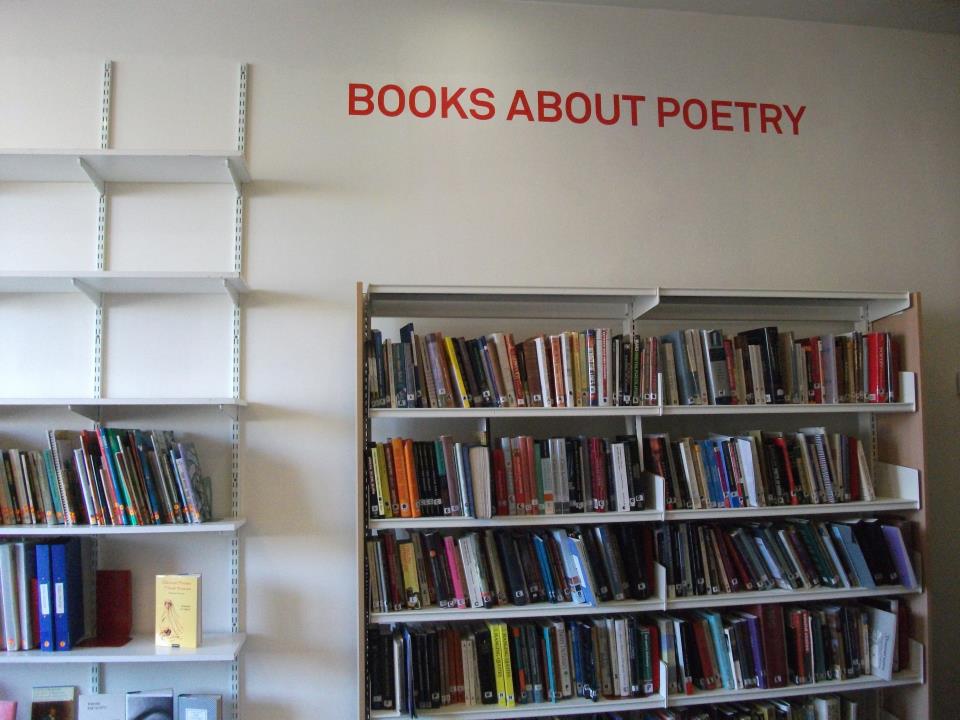
I took the above picture at the Saison Poetry Library at London's Southbank Centre, which includes a children's poetry section.

It would be an understatement to say that I grew up with books. I don't have a great many pre-reading memories, because I was three years old when I started to read. However, everyone in my family was pretty much a prose enthusiast. Famous poetry was around here and there, and I dipped curiously into my mother's old volumes of Eliot and Auden, but didn't get very far for a long time (when confronted with The Waste Land at a relatively young age, that's not surprising.) My brother and I got through scores of novels.

We started taking music lessons through the Orff Approach (incorporating a lot of percussion and play) when we were quite young, and later moved on to other instruments, so that was where we started with our love of music and rhythm. (My brother and I still both love classical music, but we REALLY love our Def Leppard and Van Halen, which our parents have been remarkably tolerant of, especially our classical-music enthusiast father). But poetry didn't make a great impact. Of course, poems and songs pop here and there in children's stories. There were moments in The Wind in the Willows, Watership Down and The Hobbit. I also enjoyed Edward Lear, though I'm not sure I ever made it all the way into his surreal world, and some of Robert Louis Stevenson's poems were wonderful. Still, we concentrated on novels (favouring the epic and medieval), and poetry didn't enter into it a great deal. I started reading Yeats fairly seriously when I was 14 or 15, and my poetic fate was gradually sealed after that.

It is only in very recent years that I have really learned about the wider world of children's poetry. I worked for a major children's publisher for a while, and although they mainly published fiction, there was the occasional book of poetry. Gradually, I started to become more familiar with some names in children's poetry. For the past two years, I have worked on publications for LAMDA Examinations, who offer exams in speaking verse and prose (among others) to the public. Part of my work involves developing the next round of anthologies for use in exams, and as a result I've read through copious amounts of children's poetry. At the mid and higher levels the poetry is more adult-level, but at the younger levels - well, there are a great many poems about cats, the sea, witches, dogs, wind, school, cats, and, er...cats. Still, although the subjects may seem more limited, there can be a pretty wonderful variety. The colleague with whom I've worked on developing the anthology is an expert on children's poetry, so she had more suggestions than we knew what to do with.

It's been a nice kind of education. Until now I never knew much about the children's poems of Jack Prelutsky, Ken Nesbitt, Grace Nichols, Dionne Brand, Roger McGough or Brian Patten. Some of these poets write for adults as well, of course. Children's poetry tends toward the humorous, and that's still not one of my preferred areas for poetry, so perhaps that had something to do with my relative disinterest when I was young. It is an art all its own, though - that is obvious. People who think writing for children is easy are so very, very wrong, and poetry is no different.

I've particularly enjoyed discovering Jack Prelutsky, who was named the first US Children's Poet Laureate by the Poetry Foundation. He is extremely funny and has an incredible ear for poetry which flows smoothly and bounces off the tongue. Here is one of his best poems, 'Be Glad Your Nose Is On Your Face'.


Be glad your nose is on your face,
not pasted on some other place,
for if it were where it is not,
you might dislike your nose a lot.


I recently saw this on a list of the greatest poems of all time - a list which was definitely rather US-centric, but still, an interesting and worthy choice...