Showing posts with label Robert Louis Stevenson. Show all posts

Saturday, 13 July 2019

Review: David Howard - The Ones Who Keep Quiet


New Zealand poet David Howard, who lives in the South Island city of Dunedin, has held residencies as close to home as the University of Otago and as far away as Prague; his next residency will be in Ulyanovsk, Russia. His most recent collection, The Ones Who Keep Quiet (2017, Otago University Press), is equally connected to New Zealand, the South Pacific and cities of the Northern Hemisphere, through the shifting figures of Auckland businessmen, alleged spies, and others.

It's an ambitious comparison, but The Ones Who Keep Quiet has something in common with TS Eliot's Four Quartets in that its poems are typically grounded in real-world places, with an almost overwhelming level of historical detail (a couple of the poems have end notes to rival Eliot's The Waste Land), but they feel internal, intellectual, mystical. If anything, they seem to depict the movement of the human mind, with its blend of the abstract and the concrete, and often under great pressure. In some cases, the pressure takes the most final form, death.

The first piece in the book is a long poem written in sestains. 'The Ghost of James Williamson 1814-2014' is about the Belfast businessman's youth on his father's ships and his eventual existence in New Zealand - both before and after his death on 22 March 1888. Appropriately, the sestains flow down the page in shapes suggesting waves, or brainwaves. There are also the tides of belief, their ebb and flow:

    ...Our fall into Paradise shows
             God is an ironist
             who gives the knife another twist -
    pointed refusal to disclose
proof He's the first cause.

There is, perhaps, also an echo of the famous ship appearing at Clonmacnoise in Seamus Heaney's 'Lightenings' (viii), when "stunned under the Gothic/arch of a monstrous swell", James Williamson declares: "the unreal becomes our last port of call". As with most poems in The Ones Who Keep Quiet, the writing is very dense and allusive, with occasional leaps which seem almost random but are carefully calculated. This poem concludes on a very odd and ironic note of "sex, drugs and rock'n'roll", which at first seemed entirely incongruous to me based on its protagonist's life in the 19th century: however, it succeeds in giving the impression that the ghost is floating freely in time, but also trapped.

Throughout, and with rare exceptions, I was more enthralled by the collection's long poems than by the shorter lyrics, as Howard's work seems to excel when it has more leisure to establish a voice and to sink into a story or a train of thought. 'The Speak House' is another centrepiece of the book, a dive into the mind of Robert Louis Stevenson in the last few hours of his life. The poem is full of very specific references to Stevenson's life and work and had a slightly overwhelming level of end notes, but the most rewarding moments are often those of sudden clarity: "Starlight strikes the dead and the living/with equal intensity, flesh being what it always was" and "breathless/running after my shadow: that is what writing is." After the demands of 'The Speak House' I turned with some relief to one of the best shorter poems (well, two pages), 'The Vanishing Line', a self-scrutinizing poem with an unfolding/enfolding structure and echoes of Paul Celan: "Between, that is where the poem grows/between the visible, the invisible."

Howard touches on family history, on love, and dedicates a beautiful poem ('L'Histoire du Soldat') to Russian poet Tatiana Shcherbina. Particularly intriguing, though, is the long poem 'Prague Casebook' which, as Howard says in the end notes, "circles the character of the New Zealander and alleged spy Ian Milner (1911-1991)". A Rhodes scholar and friend of Miroslav Holub, Milner was eventually identified as a spy who passed information to the Soviets while working for the Australian Department of External Affairs in the Post-Hostilities Division during the 1940s. He defected to Czechoslovakia, but denied having been a spy. Milner's case is still controversial. His voice in 'Prague Casebook' is ironic and elusive, sliding away, providing excuses or perhaps simple facts: "Poetry's half a meal. Don't go hungry." Milner seeks kinship with Russian poets Mayakovsky and Mandelstam - "Sing/Vladimir, sing Osip, to show we are still men among men", but no doubt also recalls their troubled or fatal relationships with the Soviet authorities. Addressing God in the closing lines of the poem, Milner could be admitting to guilt, or defining himself as a victim, or both: "Your paradise was a short ride in a fast car, I got out/on the wrong side, that's clear as ice on the highway at first light."

The Ones Who Keep Quiet isn't a perfect collection: I found that its self-consciousness could occasionally be stifling, and Howard succeeds noticeably better with male voices and characters than with female perspectives. However, it is an exceptionally skilled and ambitious work which will reward rereading, as it offers so many layers to explore. Readers who appreciate psychology, flair and challenge in their poetry will enjoy The Ones Who Keep Quiet.


Review copy courtesy of Otago University Press 

Saturday, 14 September 2013

"Go, Little Book": Poets in Edinburgh


When I go to Edinburgh, as I did last week, I go for lazy blog posts full of pictures, like this one from last year. So here's another with some of the poetic delights I came across.

This is Sir Walter Scott, from the Scott Memorial on Princes Street. Of course, I have excised the giant gothic folderol surrounding it and just included the statue.


This is a quotation from Robert Fergusson, outside the Writers Museum. He was a major influence on Robbie Burns.


These are all quotations from various Scots poets and writers on the side of the frankly weird Scottish Parliament. Here you can read and enjoy all the various quotations: http://www.scottish.parliament.uk/visitandlearn/21013.aspx


Although I didn't specifically track down the graves, I discovered that in the creepy graveyard of Greyfriars Kirk, a couple of famous or infamous poets are buried - Allan Ramsay and William McGonagall.


Here, too, was a mystery poet:


On the famous Rose Street there were planters with quotations from the likes of Hugh MacDiarmid and Ian Crichton Smith.


And in Princes Street Gardens I found this on a park bench:


We dropped in at the Scottish Poetry Library too and saw some of the beautiful and still anonymous book sculptures - as well as others here and there around town. At the Writers Museum we mainly visited with Sir Walter Scott, Burns, and Robert Louis Stevenson. I have a love for Stevenson's poems, which are wistful, dreamy and adventurous, among other things. Here's a rather lovely one.


ENVOY (Robert Louis Stevenson)


Go, little book, and wish to all,
Flowers in the garden, meat in the hall,
A bin of wine, a spice of wit,
A house with lawns enclosing it,
A living river by the door,
A nightingale in the sycamore!


All photos © Clarissa Aykroyd, 2013

Thursday, 19 April 2012

Jack Prelutsky's 'Be Glad Your Nose Is On Your Face': I Finally Discover Children's Poetry


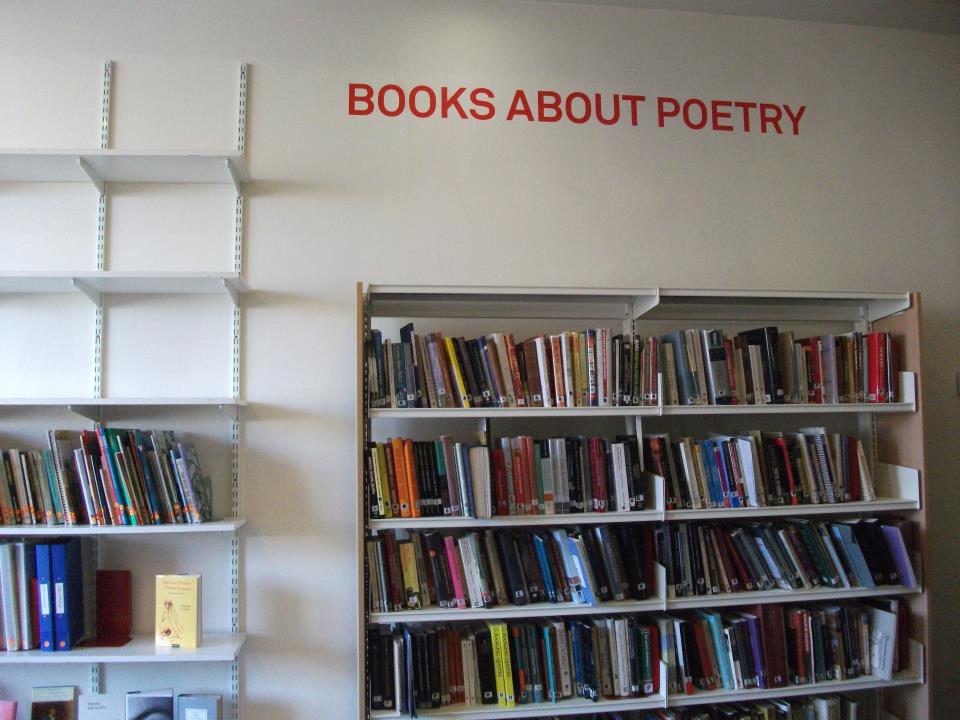
I took the above picture at the Saison Poetry Library at London's Southbank Centre, which includes a children's poetry section.

It would be an understatement to say that I grew up with books. I don't have a great many pre-reading memories, because I was three years old when I started to read. However, everyone in my family was pretty much a prose enthusiast. Famous poetry was around here and there, and I dipped curiously into my mother's old volumes of Eliot and Auden, but didn't get very far for a long time (when confronted with The Waste Land at a relatively young age, that's not surprising.) My brother and I got through scores of novels.

We started taking music lessons through the Orff Approach (incorporating a lot of percussion and play) when we were quite young, and later moved on to other instruments, so that was where we started with our love of music and rhythm. (My brother and I still both love classical music, but we REALLY love our Def Leppard and Van Halen, which our parents have been remarkably tolerant of, especially our classical-music enthusiast father). But poetry didn't make a great impact. Of course, poems and songs pop here and there in children's stories. There were moments in The Wind in the Willows, Watership Down and The Hobbit. I also enjoyed Edward Lear, though I'm not sure I ever made it all the way into his surreal world, and some of Robert Louis Stevenson's poems were wonderful. Still, we concentrated on novels (favouring the epic and medieval), and poetry didn't enter into it a great deal. I started reading Yeats fairly seriously when I was 14 or 15, and my poetic fate was gradually sealed after that.

It is only in very recent years that I have really learned about the wider world of children's poetry. I worked for a major children's publisher for a while, and although they mainly published fiction, there was the occasional book of poetry. Gradually, I started to become more familiar with some names in children's poetry. For the past two years, I have worked on publications for LAMDA Examinations, who offer exams in speaking verse and prose (among others) to the public. Part of my work involves developing the next round of anthologies for use in exams, and as a result I've read through copious amounts of children's poetry. At the mid and higher levels the poetry is more adult-level, but at the younger levels - well, there are a great many poems about cats, the sea, witches, dogs, wind, school, cats, and, er...cats. Still, although the subjects may seem more limited, there can be a pretty wonderful variety. The colleague with whom I've worked on developing the anthology is an expert on children's poetry, so she had more suggestions than we knew what to do with.

It's been a nice kind of education. Until now I never knew much about the children's poems of Jack Prelutsky, Ken Nesbitt, Grace Nichols, Dionne Brand, Roger McGough or Brian Patten. Some of these poets write for adults as well, of course. Children's poetry tends toward the humorous, and that's still not one of my preferred areas for poetry, so perhaps that had something to do with my relative disinterest when I was young. It is an art all its own, though - that is obvious. People who think writing for children is easy are so very, very wrong, and poetry is no different.

I've particularly enjoyed discovering Jack Prelutsky, who was named the first US Children's Poet Laureate by the Poetry Foundation. He is extremely funny and has an incredible ear for poetry which flows smoothly and bounces off the tongue. Here is one of his best poems, 'Be Glad Your Nose Is On Your Face'.


Be glad your nose is on your face,
not pasted on some other place,
for if it were where it is not,
you might dislike your nose a lot.


I recently saw this on a list of the greatest poems of all time - a list which was definitely rather US-centric, but still, an interesting and worthy choice...